For years, Margaret thought the hardest part of getting older would be the big things. She never expected it to be her hair.
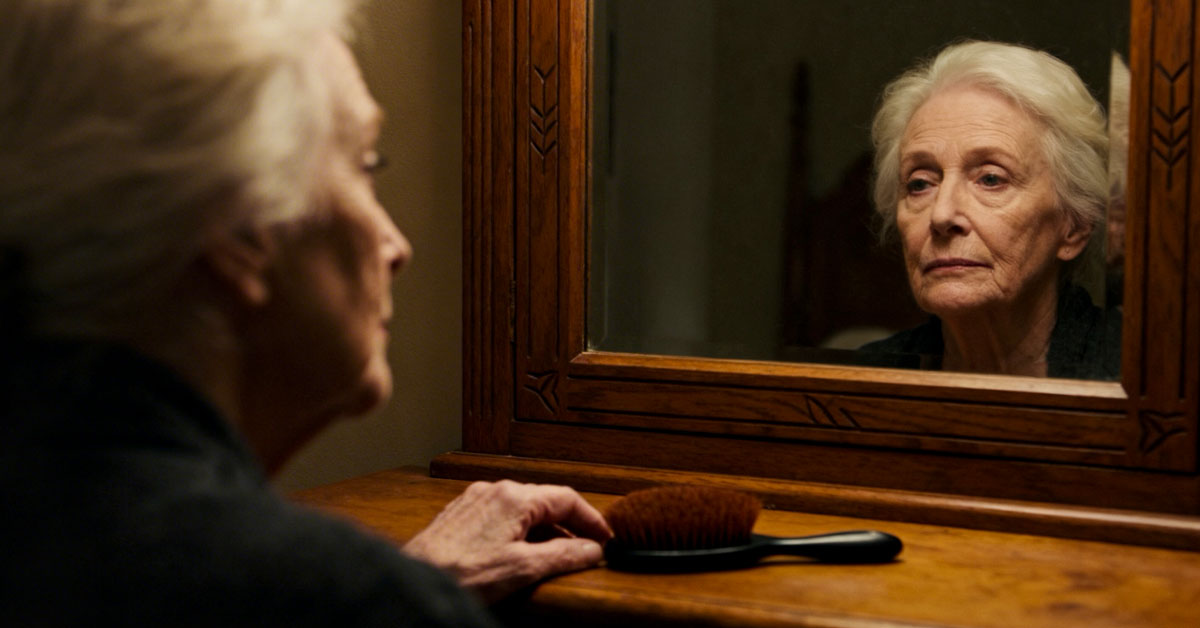
She'd always taken pride in it. Even after her husband passed, even after the grandkids stopped visiting as often, the morning ritual stayed. Coffee, then the mirror, then the brush. It was hers. Quiet, personal, unchanging.
Then her shoulder started going.
Not dramatically. Not all at once. Just a slow, creeping stiffness that made reaching behind her head feel like pulling against a bungee cord. She pushed through it for months. Winced through it. Told herself it was temporary.
It wasn't.
The morning she finally handed the brush to her daughter and said "I can't get the back" — that was the morning something small but significant broke.
When Asking for Help Feels Like Losing Something
Her daughter didn't make a fuss about it. She just brushed, asked about breakfast, moved on. But Margaret stood at that mirror for a long time after she left.
It wasn't about vanity. It was about what it meant.
There's a particular kind of loss that doesn't show up in medical charts — the slow disappearance of the small things you do for yourself. The things that tell you: I'm still capable. I still have this. And when those things start requiring help, even loving, cheerful help, the message your mind receives is quiet but persistent.
You're less than you were.
Margaret didn't say any of this out loud. Most women her age don't.
The Problem Isn't Weakness — It's Geometry
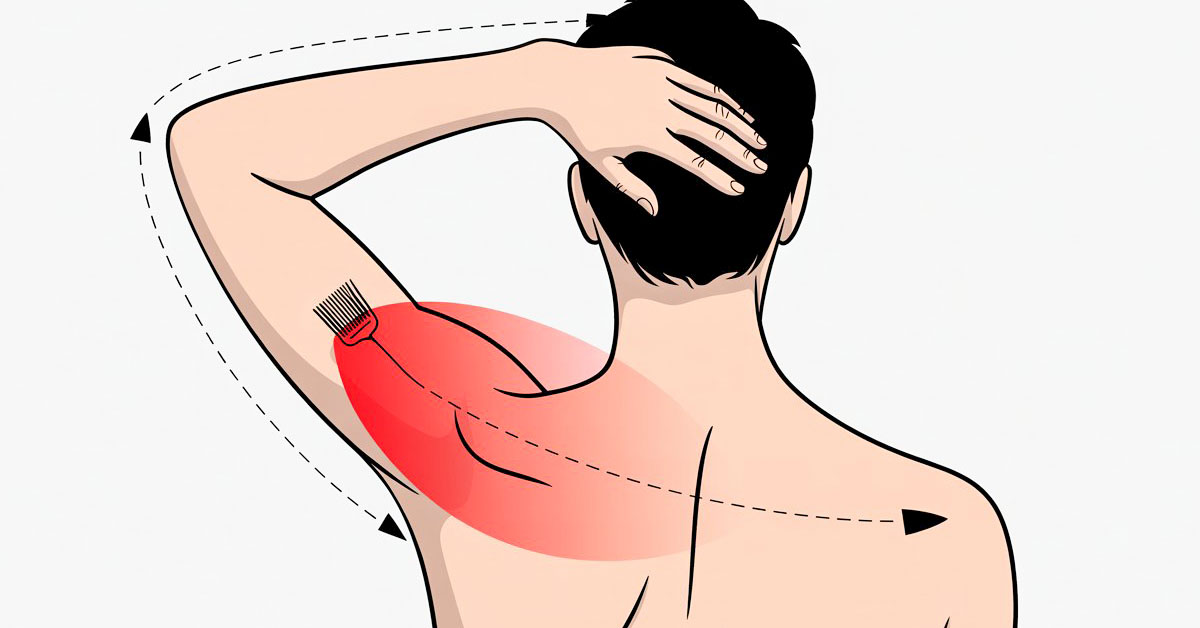
Here's what most people don't understand about shoulder stiffness and hair brushing: the problem isn't strength.
Margaret could carry groceries. She could open jars. She could garden for an hour without stopping.
The problem is the angle. Brushing the back of your own hair requires your arm to rotate behind your head in a specific arc — one that a healthy shoulder performs without thinking, and a stiff or injured shoulder simply cannot complete. It's not a matter of trying harder. The geometry doesn't work anymore.
Standard brushes are designed for that geometry. Every brush sold in every pharmacy assumes your arm moves the way it did at thirty-five.
For Margaret, and for millions of women dealing with rotator cuff wear, frozen shoulder, arthritis, or post-surgery stiffness, that assumption quietly closes a door.
A Curved Handle Doesn't Sound Like Much — Until You Use One
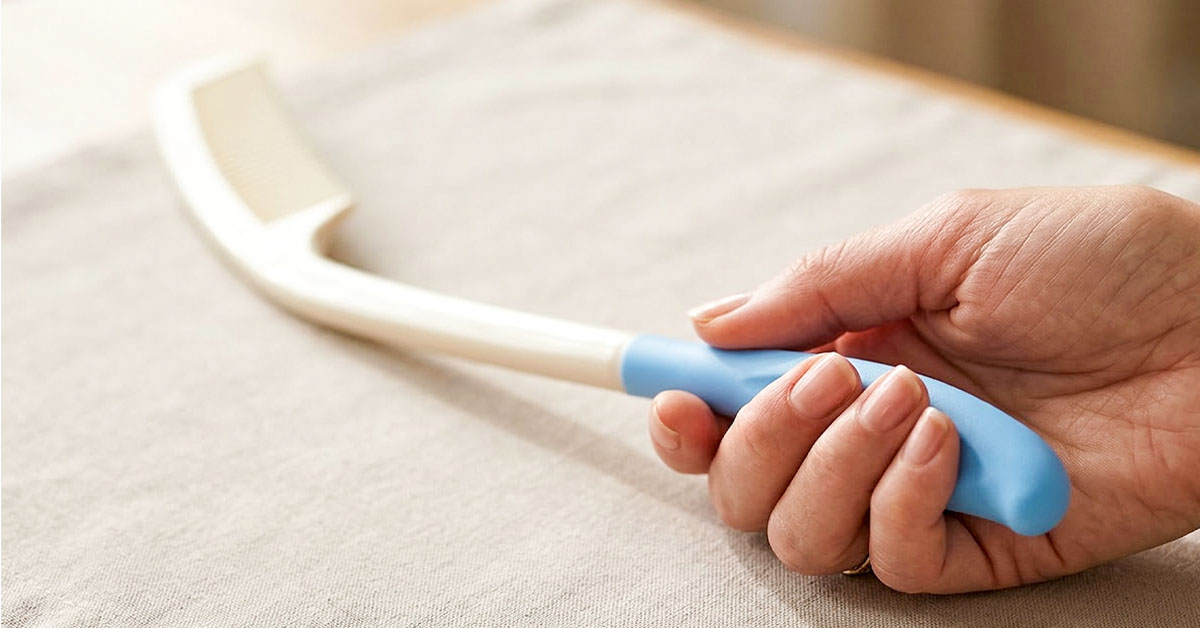
A friend mentioned ReachRight to her almost in passing. A long-handled brush with a curved grip, designed specifically for people who can't complete that arc anymore.
Margaret was skeptical. She'd seen "adaptive" products before. Bulky, clinical, the kind of thing that announces its purpose from across the room. She wasn't interested in a tool that made her feel like a patient.
ReachRight was different.
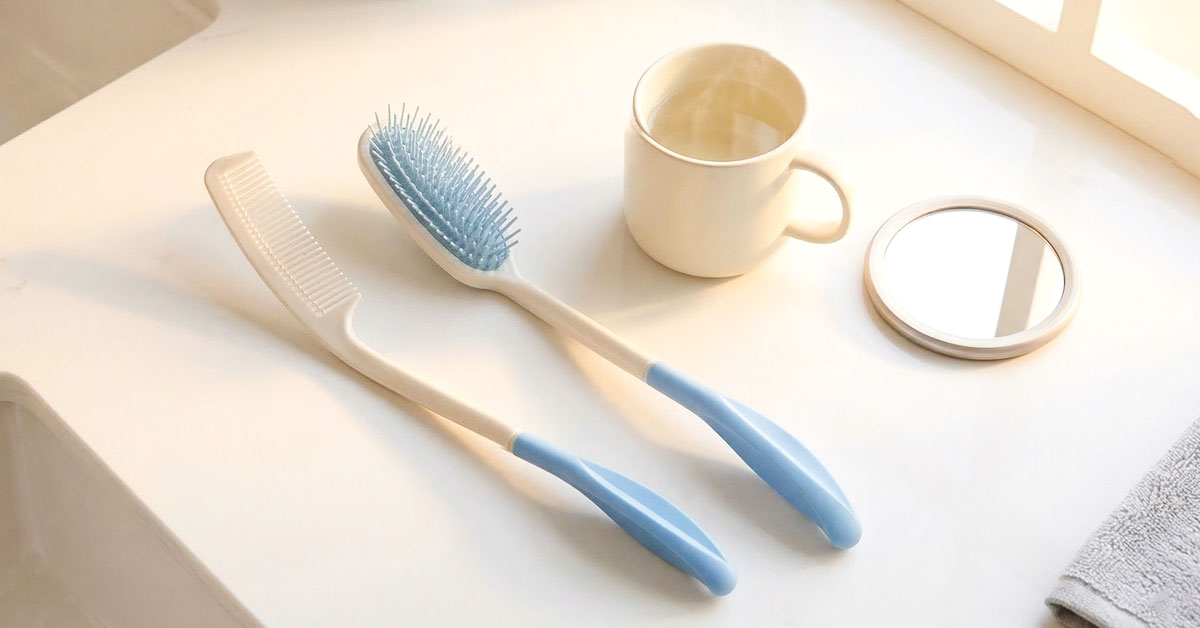
The handle is long — around 35 centimeters for the brush, 38 for the comb — but the key isn't the length. It's the curve. The angle is built into the shape, which means the brush reaches the back of the head through a natural forward motion rather than that impossible backward rotation. The shoulder stays relaxed. The arm stays in a comfortable position. The reaching happens, but not the straining.
She used it the first morning and stood at her mirror for a different reason than she had the week before.
What Nobody Mentions About Brushing Less
In the months when reaching had become difficult, Margaret had been brushing less. Not consciously. Just... shortcutting. A few strokes at the front and sides, skip the back, done.
She hadn't connected this to something she'd noticed: her hair had started looking thinner. Flatter. Less like hers.
There's a reason brushing matters beyond styling. The physical act of moving a brush across the scalp stimulates circulation — bringing blood flow to the follicles, distributing natural oils, keeping the scalp environment healthy. Hairdressers know this. Dermatologists know this. Most women intuitively know this, even if they've never been told the mechanism.
When brushing becomes painful and gets cut short, the scalp stops receiving that daily stimulation. The effects are gradual, which is why they're so easy to miss.
ReachRight's bristles are soft-tipped and flex gently on contact — less like bristles poking and more like a slow scalp massage. Combined with the ventilated brush head that creates a gentle rebound as the bristles release, each stroke does more than style. It works the scalp the way thorough brushing always should have.
Margaret's hair, three weeks in, looked better than it had in two years. She mentioned this to her daughter, who looked at her and said: "I was going to say something but didn't want to jinx it."

The Part That Surprised Her Most
She'd expected the reach. She'd expected the comfort.
She hadn't expected how light it was.
One of the quiet problems with long-handled tools is that length usually means weight, and weight means fatigue. If your hands tire easily — from arthritis, from nerve issues, from simple age-related grip changes — a heavy handle defeats its own purpose.
ReachRight is designed to stay light. The non-slip grip section means she doesn't need to squeeze hard to maintain control. On the days when her fingers feel stiff before they've warmed up, it stays in her hand without demanding much from it.
She brushes the full head now. Front, sides, back. The way she used to.
A Small Thing That Turned Out to Be a Large Thing
Her daughter came over on a Sunday about a month after Margaret had started using it.
She walked in, looked at her mother, and said: "You look really good today."
Margaret smiled and didn't explain. She just said thank you and went to put the kettle on.
But she knew. It wasn't a new haircut, or a good night's sleep, or any of the things her daughter might have assumed. It was a restored ritual. A quiet morning, alone at the mirror, doing something for herself, by herself. The small act of self-sufficiency that she hadn't realized she'd been mourning until it came back.
Some things that feel small aren't.
This Is the Right Moment to Try It
Right now, ReachRight is available at 50% off for first-time buyers — no code needed, the discount applies automatically at checkout.
Availability is limited and this offer can be removed at any time.
If any part of Margaret's story felt familiar — the shortcutting, the asking for help, the quiet frustration of a body that doesn't move the way it used to — this is worth trying. The risk is zero. Returns are accepted within 30 days for a full refund, no questions.
The mirror is waiting. The morning can be yours again.
Click the link above to see if ReachRight is still offering a 50% off discount.