Why people tired of relying on pills are paying attention to a nerve pathway researchers can reach through the ear
You are exhausted.
You have been exhausted all day.
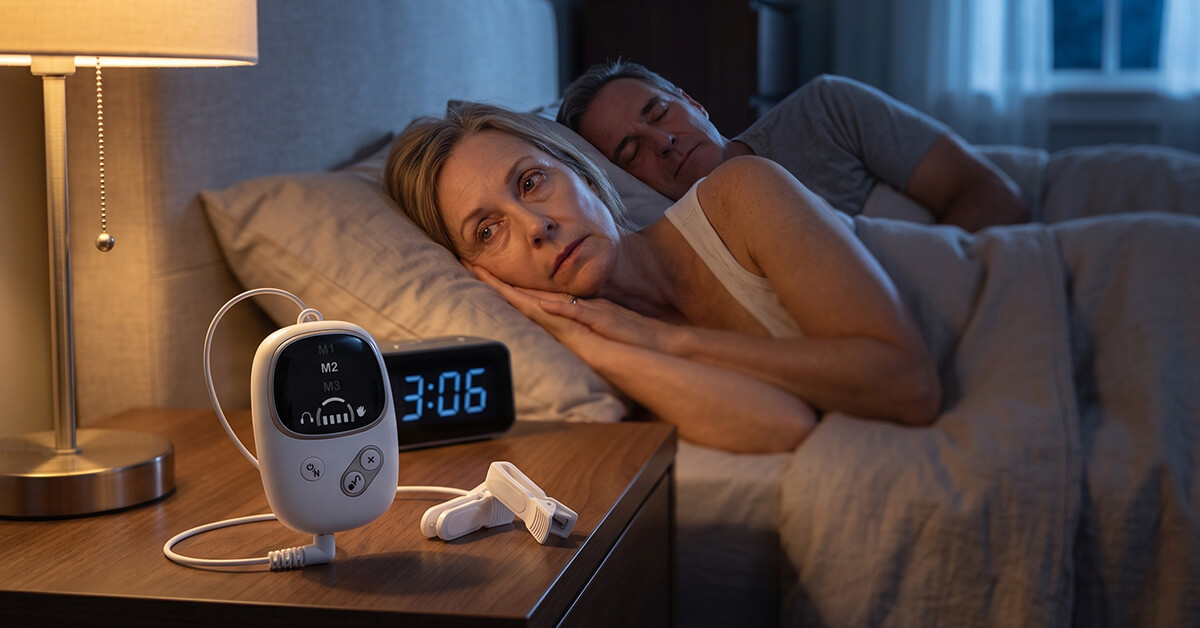
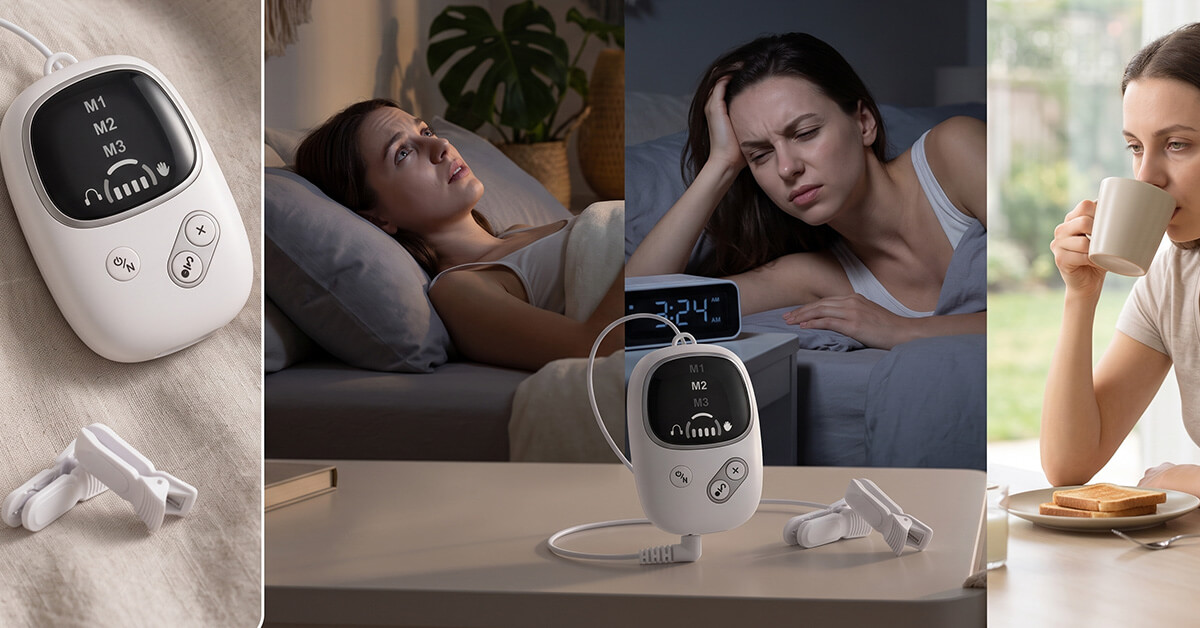
But the moment your head touches the pillow, your body seems to forget how tired it is.
Your thoughts start moving. You change positions. You check the clock.
12:48 a.m.
Then 2:17.
Then, somehow, you are wide awake again at 3:06.
Perhaps you have tried melatonin, warm milk, herbal tea, meditation apps, white noise, new pillows, or stricter bedtime routines.
And perhaps sleeping pills help—but you do not love the idea of taking something night after night just to get the rest your body should be able to find naturally.
So when people first see PureRest, their reaction is usually the same:
How could clipping a small device onto your ear possibly have anything to do with sleep?
It is a fair question.
And the answer begins with a nerve most people rarely hear about.
What Does Your Ear Have to Do With Sleep?
Running from the brainstem through the neck and into the chest and abdomen is the vagus nerve.
It forms part of the communication network involved in functions such as heart rate, digestion, and the body’s shift between states of alertness and rest.
Most of the nerve lies deep inside the body.
But one small branch—the auricular branch—reaches parts of the outer ear.
That accessible location has led researchers to study a technique known as transcutaneous auricular vagus nerve stimulation, usually shortened to taVNS.
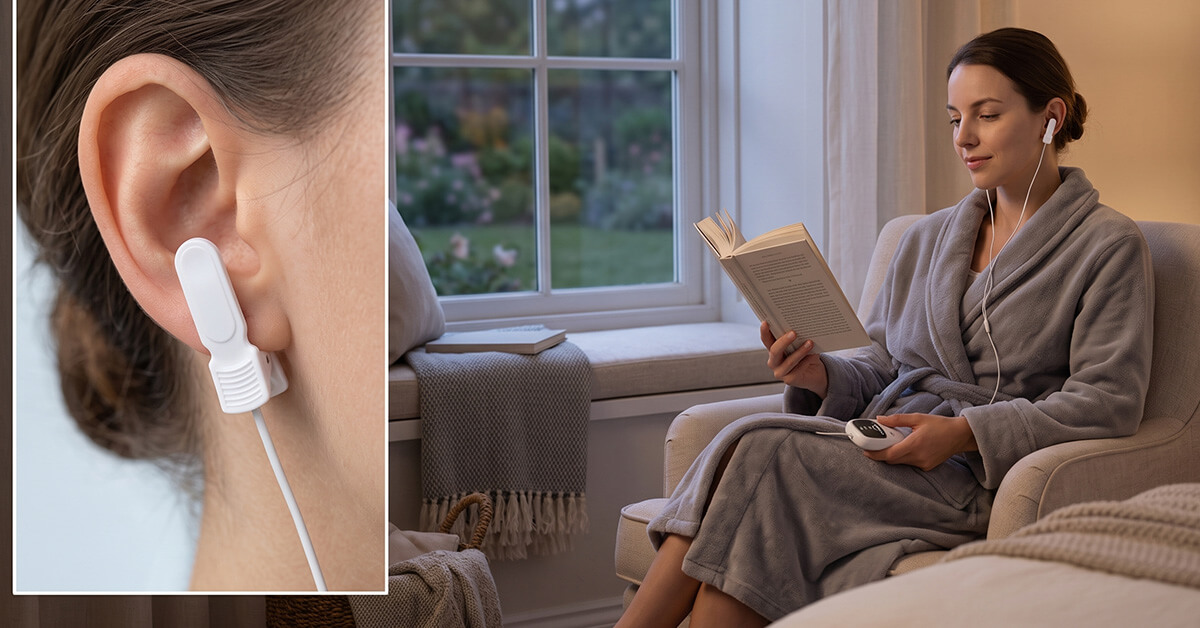
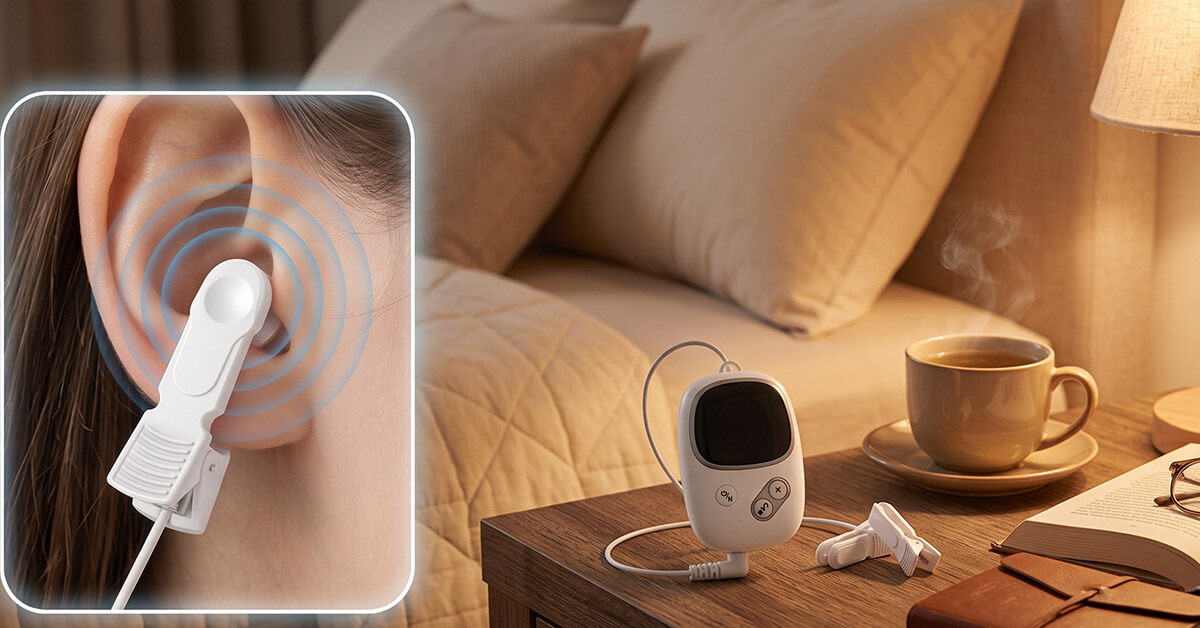
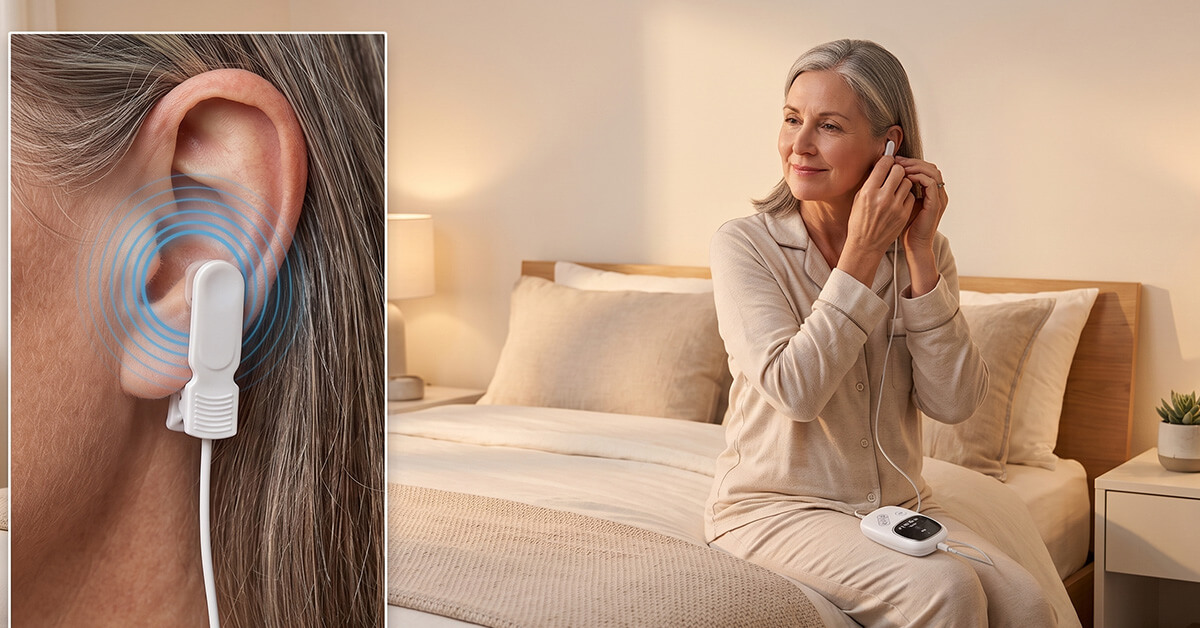
Instead of surgically implanting a device, taVNS uses mild electrical stimulation delivered through the skin at selected parts of the ear.
That is why devices using this approach may look like an ear clip.
The ear is not being used because it somehow controls sleep on its own.
It is being used as an accessible point through which gentle stimulation can be delivered near a nerve pathway involved in the body’s regulation of alertness and rest.
Why Researchers Are Studying This Pathway for Insomnia
Many sleepless nights do not feel like a lack of tiredness.
They feel like an inability to switch off.
Your body is in bed, but part of you still feels alert.
Your muscles remain tense. Your thoughts continue running. A small sound feels unusually noticeable. Once you wake during the night, it can be difficult to settle again.
Researchers have been investigating whether stimulation through the ear may help influence systems involved in this state of physiological alertness.
Controlled human studies using specific taVNS protocols have reported improvements in established measures of insomnia and sleep quality compared with sham stimulation.
These findings do not mean that ear stimulation is a guaranteed cure for sleeplessness.
They do mean the idea is not simply based on a strange-looking gadget.
It is part of a developing field of non-invasive neuromodulation research.
So Where Does PureRest Fit In?
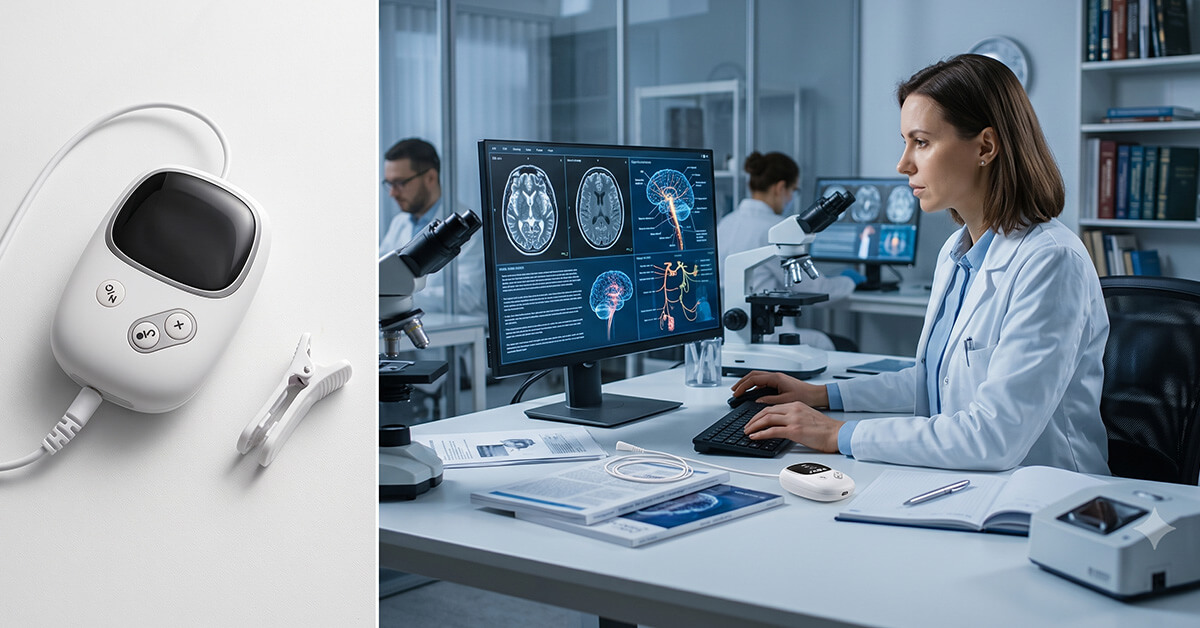
PureRest is designed to make auricular electrical stimulation simple enough to use at home.
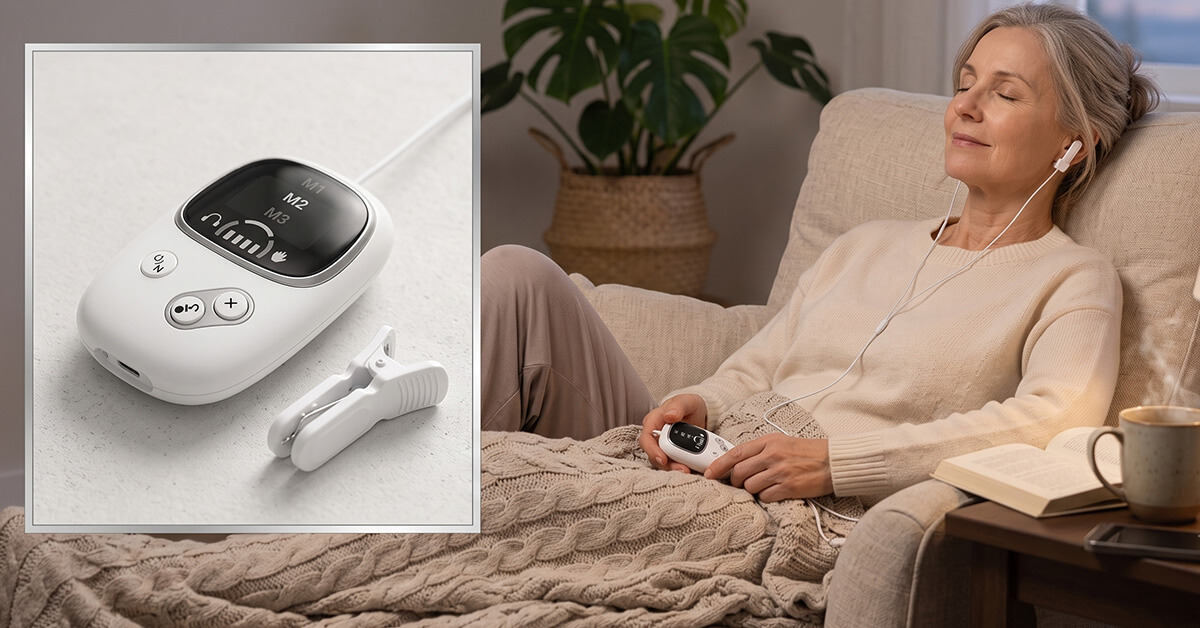
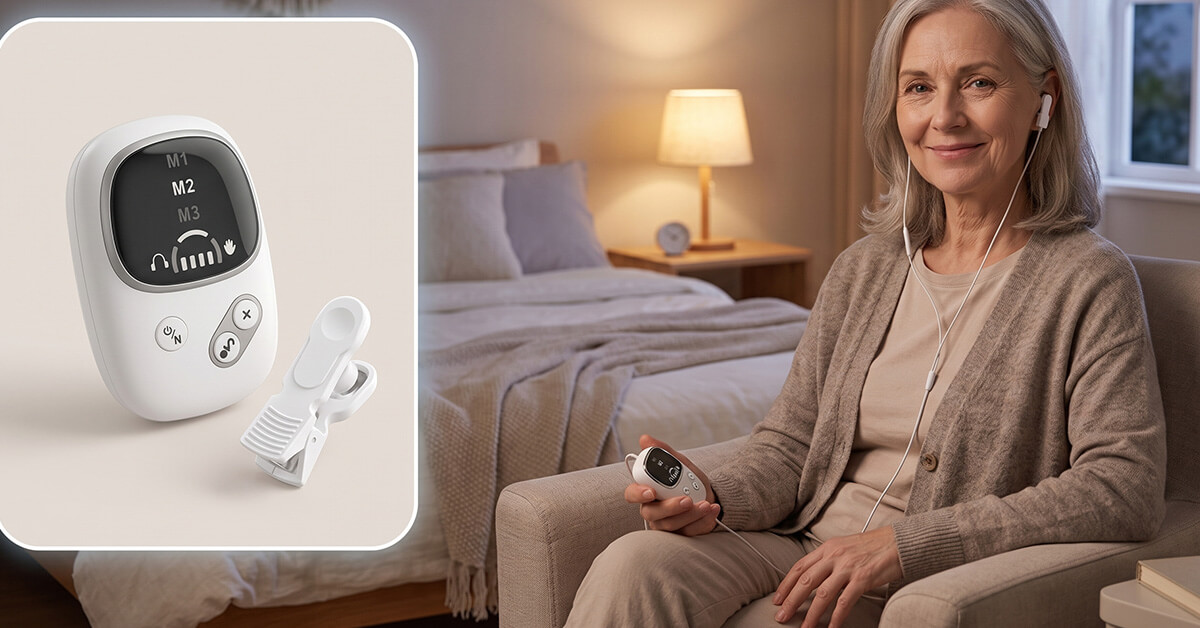
Instead of complicated equipment, it uses a compact controller and an ear-clip attachment that delivers a gentle pulsing sensation.
The idea is simple:
- Attach the clip to the recommended location on the ear.
- Begin at the lowest comfortable intensity.
- Use it during a quiet wind-down period before bed.
- Allow the session to run for the recommended amount of time.
The sensation should feel mild and noticeable—not painful.
PureRest is not a sedative.
It does not knock you unconscious or force the body to sleep.
It is designed to be used as part of a consistent evening routine that helps you step away from stimulation and begin settling down.
What Does It Feel Like to Use?
Imagine the last 20 minutes before bed.
The lights are dim.
Your phone is put away.
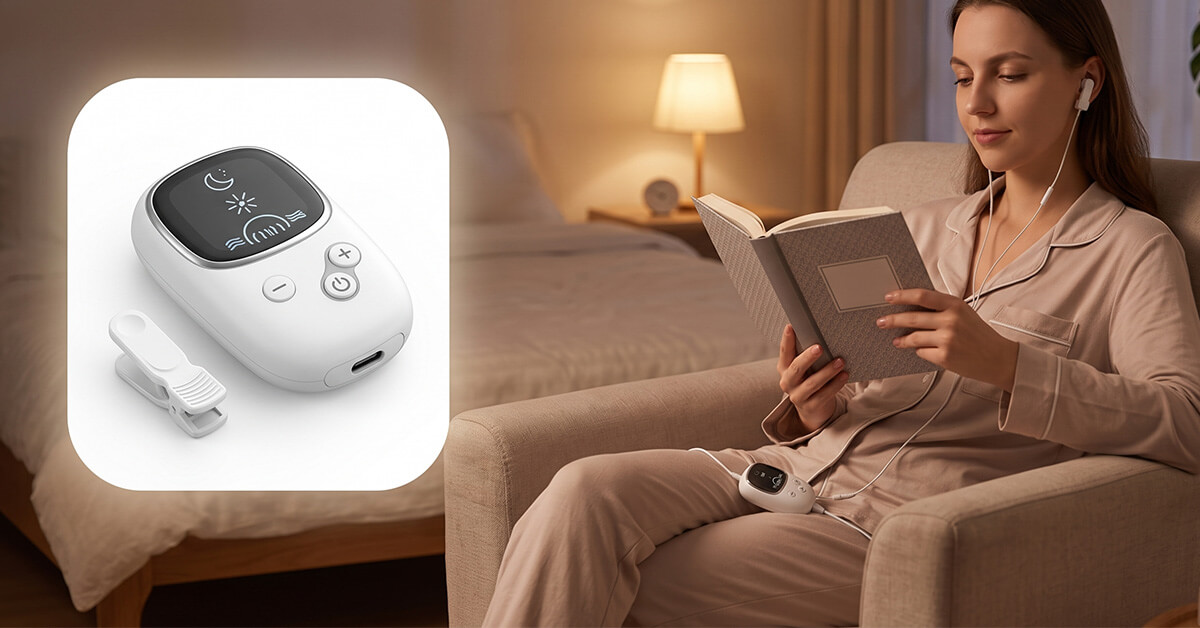
You clip PureRest onto your ear and choose a comfortable setting.
Then you sit back with a book, listen to quiet music, or simply rest while the device delivers a soft, rhythmic pulse.
There is no tablet to swallow.
No complicated meditation lesson to follow.
No need to stare at another screen.
Just a short period in which you stop checking tomorrow’s schedule, stop trying to force sleep, and begin giving your body a chance to wind down.
“I Was Skeptical Because It Looked Too Simple”
“The first time I saw it, I thought, ‘How can something clipped to my ear help with a problem I have had for years?’
I did not suddenly sleep perfectly on the first night. But after using it consistently, I noticed that I felt less wound up before bed.
When I woke during the night, I did not feel quite as alert, and some nights I was able to settle again more easily.
What surprised me most was how easy it was to keep using. It became part of my routine instead of another complicated sleep program I eventually abandoned.”
— Verified PureRest Customer
Individual experiences vary. PureRest should be used consistently and should not be treated as an instant or guaranteed solution.
How Is PureRest Different From Things You May Have Already Tried?
Sleeping pills
Medication can be appropriate and helpful for some people under medical guidance.
But many people are also looking for a non-pill option they can add to their bedtime routine.
PureRest does not contain medication, and nothing is swallowed.
It is not intended to replace prescribed treatment. Never stop or change medication without speaking with a qualified professional.
Melatonin and supplements
Supplements are easy to take, but results vary, and some people do not want to add another substance to their nightly routine.
PureRest uses external electrical stimulation instead.
Meditation apps
Relaxation exercises can be useful, but they often require sustained concentration at precisely the time a racing mind finds it difficult to focus.
PureRest can operate while you rest, read, or listen to something calming.
Warm milk, tea, and bedtime rituals
These may make the evening feel more comfortable, but they do not provide targeted auricular electrical stimulation.
PureRest can be added to a healthy bedtime routine rather than replacing it.
Is PureRest Complicated?
No.
You charge the device, connect the clip, place it at the recommended location, and select a comfortable intensity.
There is no complicated setup and no lengthy learning process.
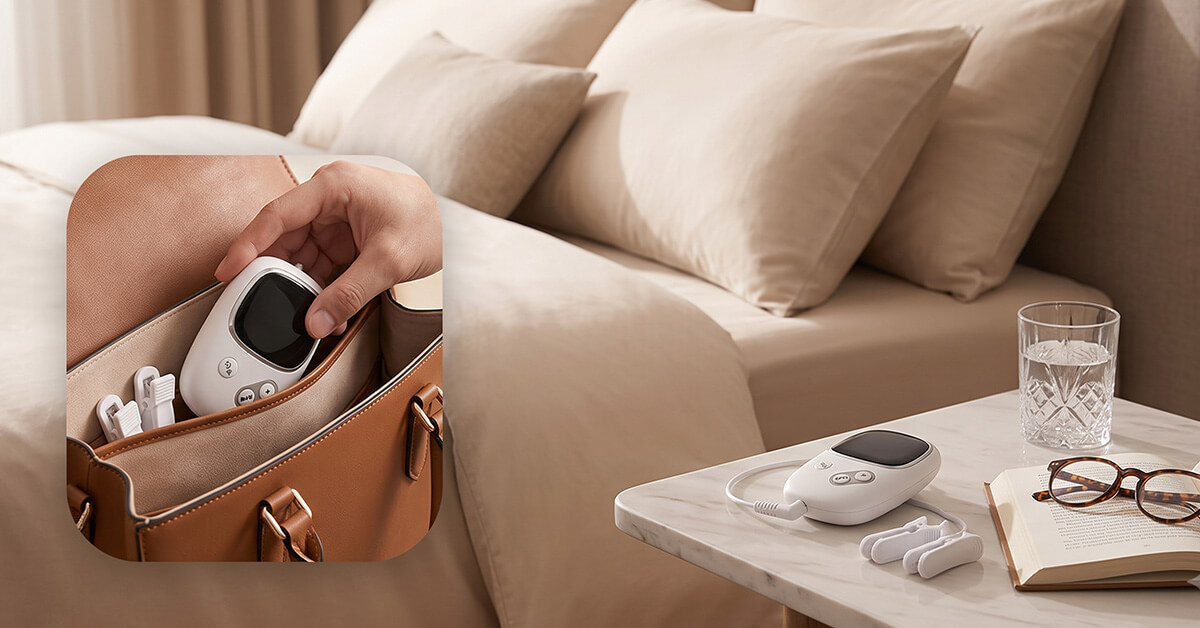
Its compact size also makes it easy to keep on a nightstand, place in a bag, or bring while traveling.
Is It Safe?
Non-invasive auricular stimulation has generally been described as well tolerated at the stimulation levels used in published research.
However, non-invasive does not mean that discomfort is impossible.
Some people may experience mild irritation, tingling, headache, or discomfort around the contact area.
Always begin with the lowest comfortable intensity and stop using the device if stimulation becomes painful or causes an unexpected reaction.
People who are pregnant, have an implanted electronic device, have a significant heart condition, experience seizures, or have another relevant medical condition should seek professional advice before use.
Persistent sleeplessness can also be associated with conditions such as sleep apnea, medication effects, depression, anxiety, chronic pain, or other underlying health concerns.
PureRest should not replace appropriate medical evaluation.
Who Is PureRest For?
PureRest may be worth considering when you:
- struggle to wind down even though you feel tired;
- wake during the night and feel unusually alert;
- want to explore a non-pill bedtime option;
- prefer something simple enough to use while reading or resting;
- understand that individual results can vary;
- are willing to use it consistently rather than expecting an overnight miracle.
It may not be appropriate for someone expecting guaranteed sleep after one session or someone who has not yet investigated a potentially serious cause of persistent insomnia.
A Different Ending to the Same Night
Think back to the moment that brought you here.
It is 3 a.m.
You are staring at the clock, already calculating how many hours remain before morning.
Perhaps you have lived through that moment so many times that you no longer expect anything different.
PureRest cannot promise that every night will suddenly become perfect.
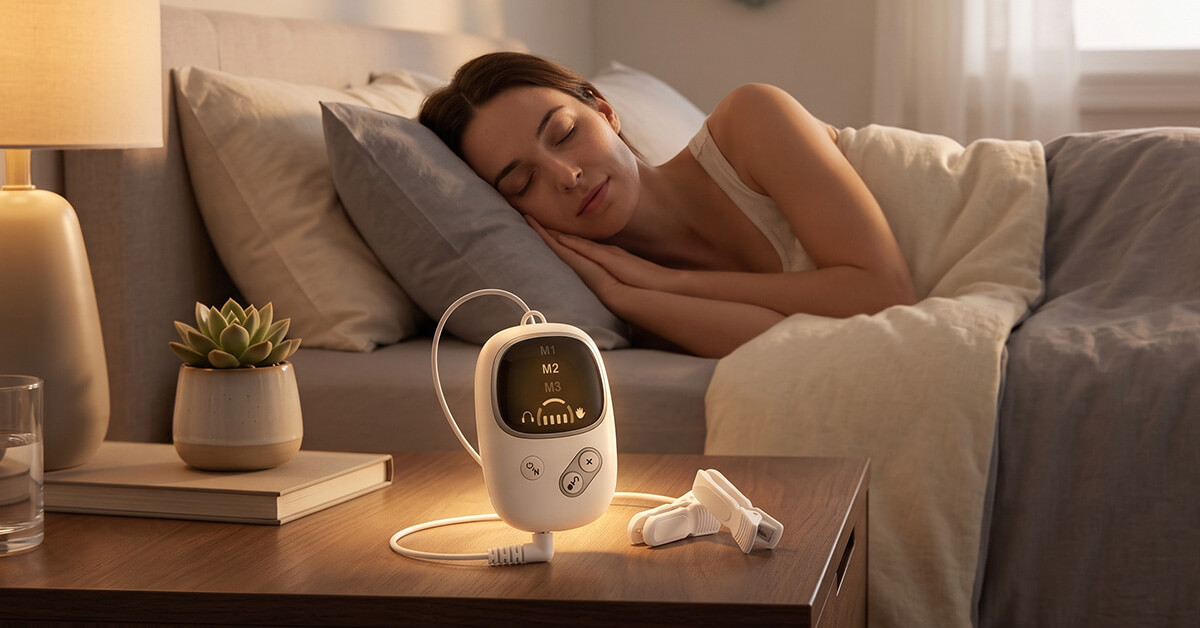
What it offers is a different approach—one based on gentle stimulation through the ear rather than another pill added to the nightstand.
The science behind auricular stimulation is still developing.
Individual results will always vary.
But for someone who has been searching for a simple, non-invasive addition to a healthier bedtime routine, PureRest may be worth trying.
Not because it promises a miracle.
Because there is finally a reasonable answer to the question that made you click:
Why would a sleep device clip onto the ear?
Now you know.
The next question is whether it could fit into your own evening routine.
Try PureRest for 50% Off
For a limited introductory period, new customers can claim 50% off PureRest.
Your order is also protected by a 30-day money-back guarantee.
That means you can receive PureRest, add it to your evening routine, and see how it feels for yourself.
When it is not right for you, contact the customer-care team within 30 days of delivery and follow the return instructions to request a refund according to the return-policy terms.
There is no need to decide whether you believe in it based on one article alone.
You can try it in your own home, during your own bedtime routine, and make the decision based on your own experience.
Click the link above to see if PureRest is still offering a 50% off discount.