The Retired Teacher Who Laughed at Her Sister's "Magic Necklace" — Until She Noticed Something Strange About Her Own Health
She’d caught every bug that passed through her church, her book club, and her grandchildren’s school for twenty years. Then, almost by accident, that changed.

"I Told Her It Looked Like Something From a Vending Machine"
Margaret Chen had seen her share of health fads.
Magnetic bracelets. Copper rings. That strange foot patch her neighbor swore pulled toxins out while she slept. At 68, she’d developed a finely-tuned radar for what she called “wishful thinking in a box.”
So when her younger sister Linda showed up to Thanksgiving dinner wearing a sleek black pendant on a lanyard and announced it was an air purifier, Margaret did what any reasonable older sister would do.
She laughed.
“I said, ‘Linda, that’s not an air purifier. That’s a Happy Meal toy,'” Margaret recalls, still smiling at the memory. “She just shrugged and said, ‘Okay. We’ll see.'”
Margaret forgot about it entirely within the hour. There was turkey to carve and grandchildren to chase.

The Winter That Wouldn't Leave Her Alone
By February, Margaret had already been sick three times.
First it was the cold her grandson brought home from kindergarten in November — the one that turned into a two-week sinus situation requiring two rounds of antibiotics. Then the stomach bug that circulated through her church’s Christmas potluck. Then whatever was going around her Tuesday book club in January, which knocked her flat for five days right before her birthday.
This had been her reality for years. Not dramatically sick. Not hospitalised. Just constantly on the edge of something — that scratchy throat feeling, the heavy head, the mornings where she couldn’t tell if she was coming down with something or just tired.
“My doctor called me a ‘frequent flier,'” she says. “I think he meant it kindly. But I hated it.”
She was careful. She washed her hands. She carried sanitiser. She occasionally wore a mask in crowded spaces, though she found them uncomfortable and fogged her glasses. None of it seemed to make a meaningful difference.
She was just, as she put it, “someone who catches things.”

A Conversation She Almost Didn't Have
It was a phone call with Linda in March that changed things.
Margaret had just finished telling her about the latest round — a cold she’d caught after a granddaughter’s school play, despite sitting near the back of the auditorium.
There was a pause on the line.
“Linda said, ‘You know, I haven’t been sick once this winter,'” Margaret recalls. “And I thought — well, Linda’s always been healthier than me. Different constitution.”
But Linda pushed back gently. She reminded Margaret that she too had been a “frequent flier.” That she’d caught every office bug during her working years. That she’d been the one calling in sick two, three times every winter without fail — right up until about a year ago.
Margaret asked what had changed.
“She said, ‘Remember the necklace you made fun of at Thanksgiving?'”

What the Necklace Actually Does (And Why Margaret Was Skeptical Even After She Ordered One)
Margaret is a retired science teacher. She doesn’t accept explanations that sound like magic.
So before she ordered anything, she spent two evenings reading. Not product pages — actual articles about negative ion technology, about how airborne particles behave, about what ionization does to microscopic pollutants before they reach the respiratory system.
What she found surprised her.
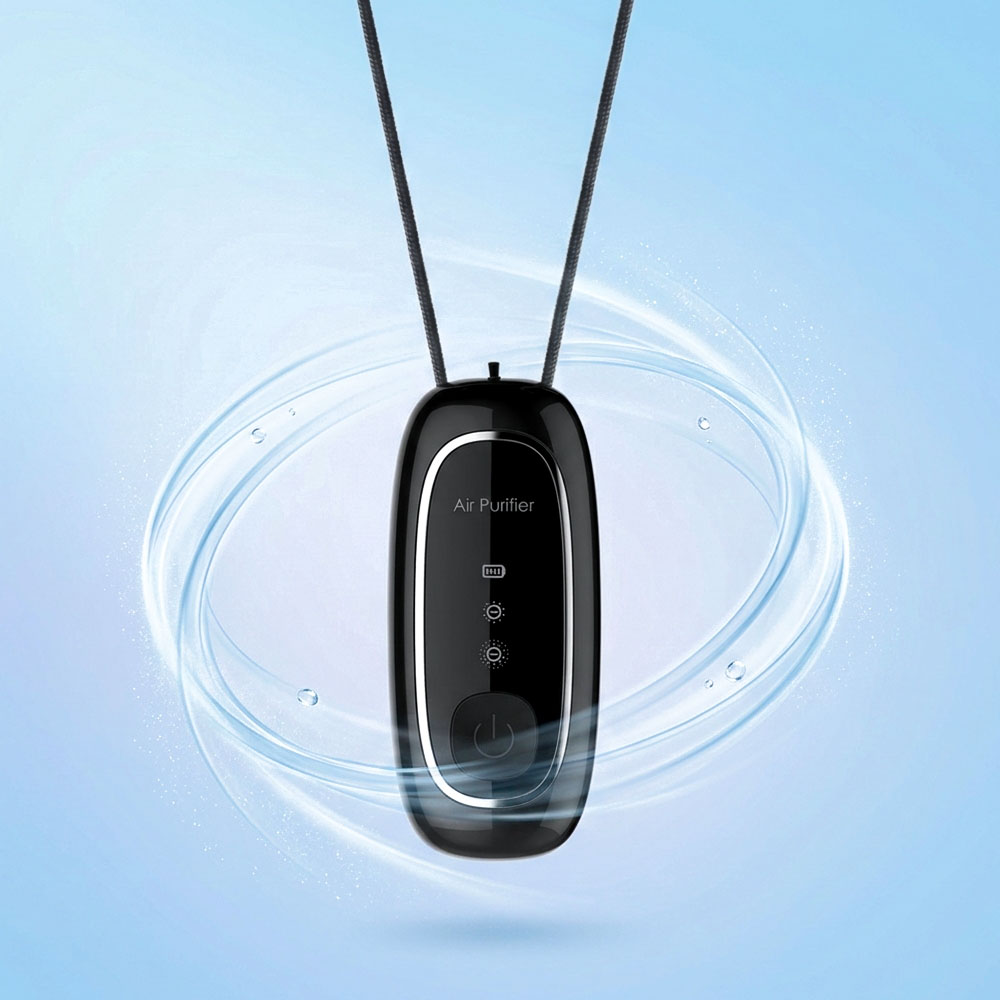
The technology inside the pendant — a carbon brush that continuously emits negative ions — works by giving microscopic particles an electrical charge. Viruses, allergens, PM2.5 dust particles, pollen. Once charged, they’re repelled away from the breathing zone before they’re inhaled. No filter. No fan. No chemical process. Just physics, operating silently and continuously within a personal space around the wearer’s nose and mouth.
“It’s not magic,” she explains, with the precise language of someone who spent thirty years teaching fourteen-year-olds how things actually work. “It’s just that the air immediately around you becomes less hospitable to the things that make you sick.”
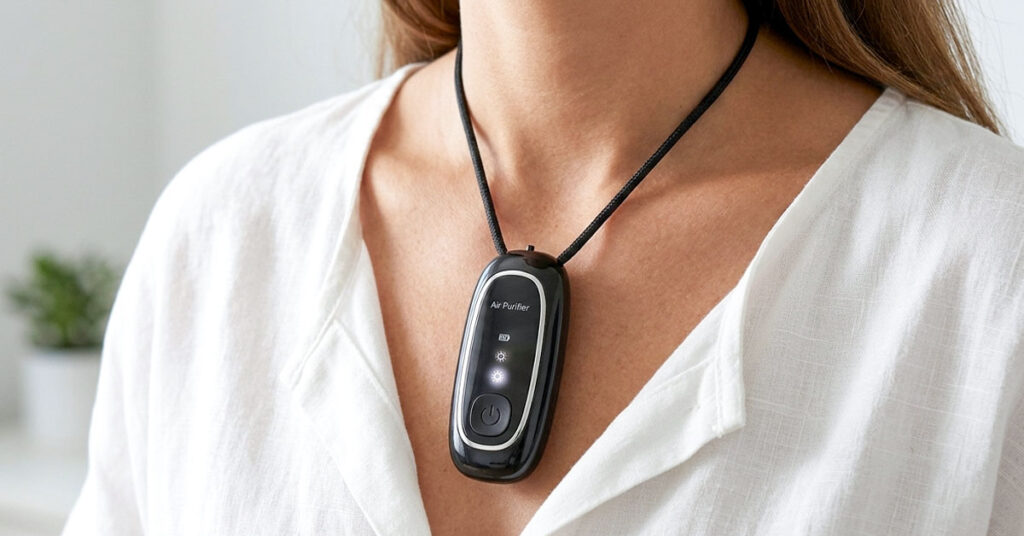
She ordered one — a black model, she notes with some amusement — and wore it with roughly zero expectations.
"I Kept Waiting to Get Sick"
The first test came at her granddaughter’s birthday party in April. Twelve children under the age of eight, the biological equivalent of a virus convention. Margaret wore the necklace under her blouse.
She didn’t get sick.
She noticed it, filed it away, told herself it proved nothing.
The second test came at her book club in May, when three of the six women arrived coughing and sniffling. The following week, four of those six women were out with the same cold. Margaret felt fine.
She noticed that too.
“By June, I’d been in three situations where I would have absolutely caught something before, and I hadn’t. I mentioned it to my doctor and he said, ‘Well, whatever you’re doing, keep doing it.'”
She still wore it tucked under her clothes most of the time — partly habit, partly because she wasn’t ready to become the person evangelising about a pendant at book club.
Then September came, and her husband came home with a chest cold from a work reunion. For a week, Margaret slept beside a man coughing in her direction every few hours.
She wore the necklace to bed every night that week.
She didn’t catch it.
“That,” she says, “was when I stopped explaining it away.”

The Thing She Tells Her Friends Now
Margaret doesn’t lead with the science anymore when she recommends it.
She leads with this: What do you have to lose?
She’s watched two friends from book club order one after she finally broke down and told her story. One of them, a woman with chronic sinus issues who’d been through the same antibiotic cycle every winter for a decade, called her in December to report that she’d made it to Christmas without a single infection for the first time in recent memory.
The other friend, a woman who is “extremely skeptical of everything,” admitted quietly that she’d stopped carrying cold medicine in her handbag — because she kept forgetting she needed it.
Margaret wears hers every day now. To church. To the grocery store. On the plane to visit her son in Seattle. To bed when anyone in the house is sniffling.
It sits on her nightstand when she’s not wearing it, small and unobtrusive, next to her reading glasses and her library book.
“My sister has never once said ‘I told you so,'” Margaret says. “Which honestly makes me trust her more than if she had.”
She pauses, then laughs.
“I still think it looks a little like a vending machine toy.”
The Necklace That Retired Teachers, Frequent Fliers, and Reluctant Skeptics Are Now Wearing Every Day
The PureAura Travel-Ready Ion Necklace emits up to 120 million negative ions continuously, creating a cleaner breathing zone within your personal space. It weighs less than two AA batteries, operates at under 5 decibels — silent enough to wear to bed — and requires no filters, no refills, and no maintenance beyond an occasional wipe-down. One charge lasts 30 to 60 hours. The adjustable lanyard fits everyone from toddlers to grandparents. It comes in black or white.
It doesn’t look like a medical device.
It looks like jewelry.
For a limited time, first-time buyers can claim a special 50% introductory discount — no code needed. This offer reflects limited stock availability and may be removed at any time. If the discount is still showing on the product page, it’s still active.
→ Click here to check if the 50% off offer is still available
Customer reviews
| 5 Stars |  |
91% |
| 4 Stars |  |
9% |
| 3 Stars |  |
0% |
| 2 Stars | |
0% |
| 1 Star | |
0% |