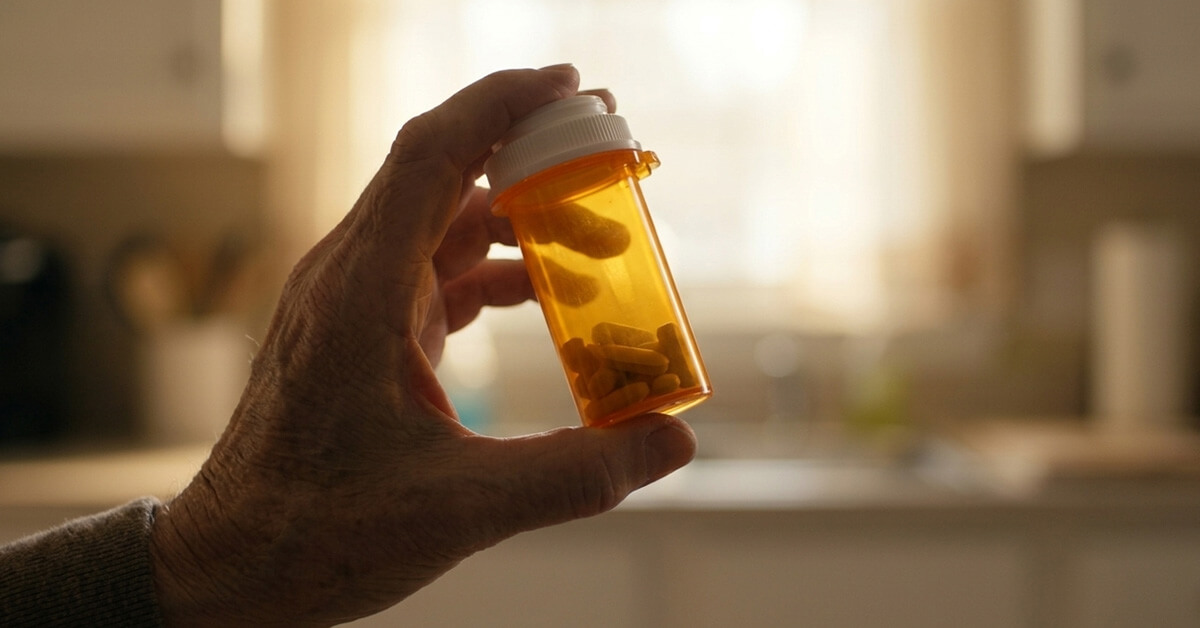
For years, millions of older adults start their morning the same way — picking up a pill bottle, shaking it, and trying to remember.
It sounds harmless. It isn't.
The Ritual Nobody Talks About
It starts small. You wake up, shuffle to the kitchen, and there's the bottle sitting on the counter. Did you take it already? You think you did. But did you? You pick it up, shake it, try to count the remaining pills through the orange plastic. You can't quite tell. So you either take it again and hope for the best — or skip it and tell yourself you'll be more careful tomorrow.
For millions of seniors managing two, three, four medications a day, this is just Tuesday morning. It doesn't feel like a crisis. It feels like a minor inconvenience. But for blood thinners, blood pressure medication, heart pills, or diabetes prescriptions, "I think I took it" is not a safe answer.
Why Memory Alone Was Never Designed for This
The human brain is remarkably good at many things. Tracking whether a small white pill was swallowed at 7:43 this morning versus yesterday at 7:43 this morning is not one of them.
Doctors call it medication non-adherence, and it's responsible for roughly 125,000 deaths and 10 percent of hospitalizations in the United States every year. Most of those cases aren't caused by people who don't care. They're caused by people who genuinely couldn't remember — and had no reliable system to help them.
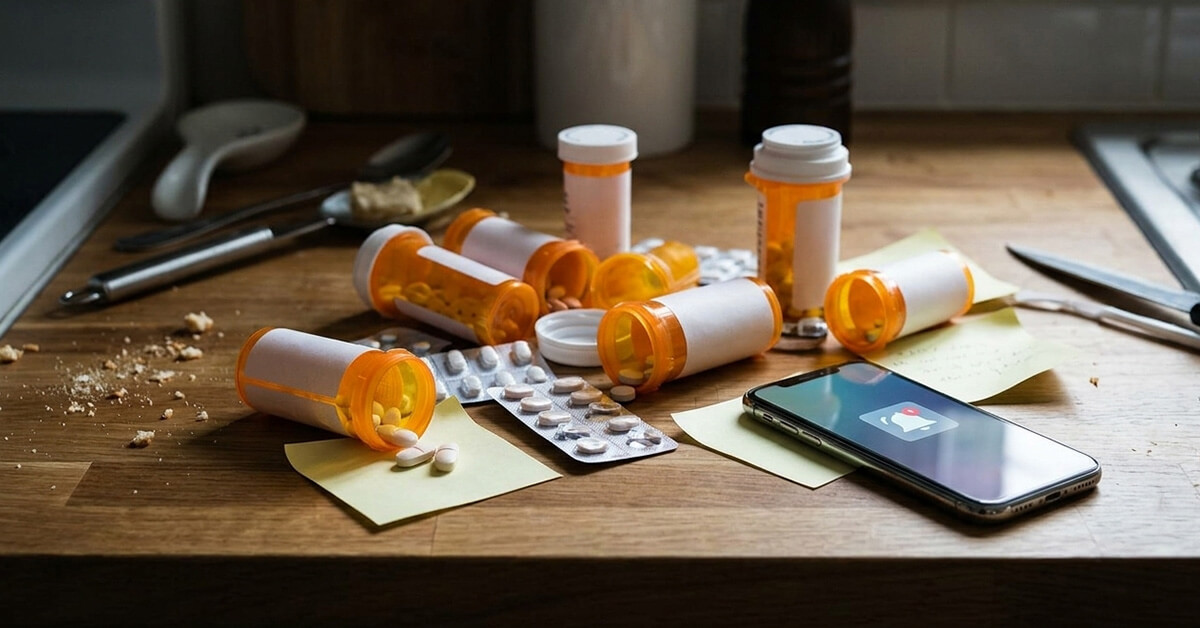
Post-it notes fail. Phone alarms get silenced. Pill bottles all look the same. And the more medications on the counter, the worse the confusion gets.
The Shake Test Is Not a Safety System
Here's what makes the shake test particularly risky: it only tells you how many pills are left, not when the last one was taken. If you took yesterday's dose at noon and today's dose at 8am, the count looks normal. You'd never know something was off.
Double dosing — even once — can cause serious problems depending on the medication. Blood pressure drugs taken twice can cause dangerous drops. Blood thinners can increase bleeding risk. Certain heart medications have a narrow safe range where too much is as dangerous as too little.
None of this requires negligence. It just requires one foggy morning and a bottle that can't tell you anything useful.
What Actually Fixes the Problem
The solution isn't a better memory. It's removing memory from the equation entirely.
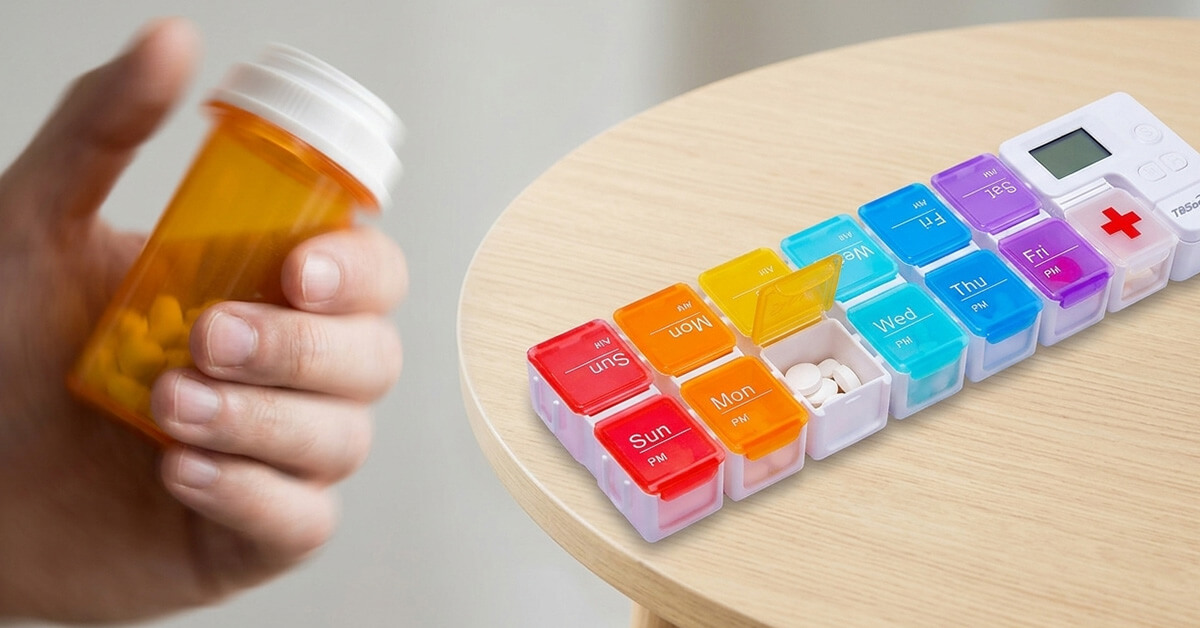
The MedAlert Weekly Pill Organizer works on a simple principle: the alarm tells you when to take the pill, and the compartment shows you whether it's been taken. No counting. No guessing. No shaking.
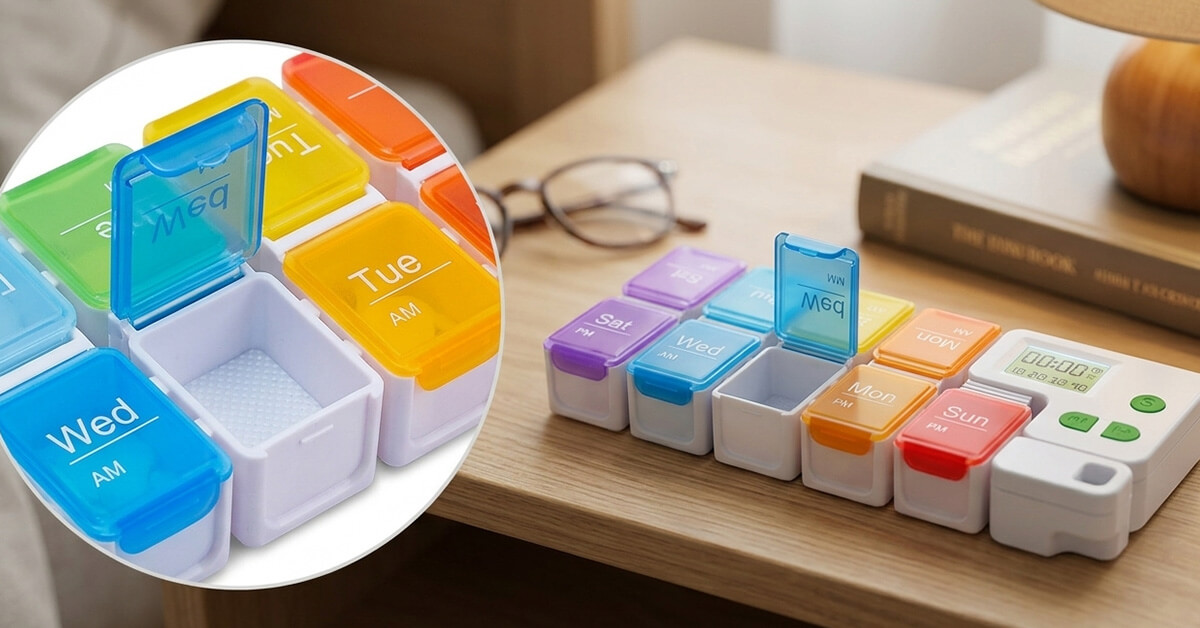
Set up to four separate alarms — one for each medication window across the day. Set them once, and they repeat automatically every single day without ever needing to be reprogrammed. When the alarm sounds, you open that day's color-coded compartment, take what's inside, and close it. If the compartment is empty, you've already taken it. The answer is right in front of you.
Each daily section snaps apart from the main organizer, so a Tuesday dose in a pocket doesn't mean dragging the entire week along. The reinforced lock-catch keeps lids sealed through a gym bag, a purse, or a carry-on. And the moisture-proof seal keeps every pill fresh even in humid climates.
The Morning That Changes
The first morning with a system like this feels almost strange. The alarm goes off. The compartment is right there. The lid clicks open. Pills are taken. It's done.
No shaking. No squinting at orange plastic. No math. No second-guessing.
Just the quiet, unremarkable confidence of knowing — not guessing, knowing — that the medication was taken. That the dose was right. That today is handled.
For something that happens every single day for the rest of a person's life, that feeling is worth more than it sounds.

This Is the Right Time to Try It
Right now, first-time buyers can get the MedAlert Weekly Pill Organizer at 50% off the regular price. This offer is available while supplies last and may be removed at any time.
If mornings still start with a shake of the bottle and a guess — this is the moment to change that.
Click the link above to see if MedAlert is still offering a 50% off discount.