How thousands of post-surgery patients are getting their morning routine back — without bending an inch
"Don't Bend Past 90 Degrees." Easy for Him to Say.
Dr. Mahoney was very clear the morning of discharge. No bending at the hip past 90 degrees. No twisting. No reaching down toward the floor. For at least twelve weeks.
Richard nodded along like it was the most obvious thing in the world.
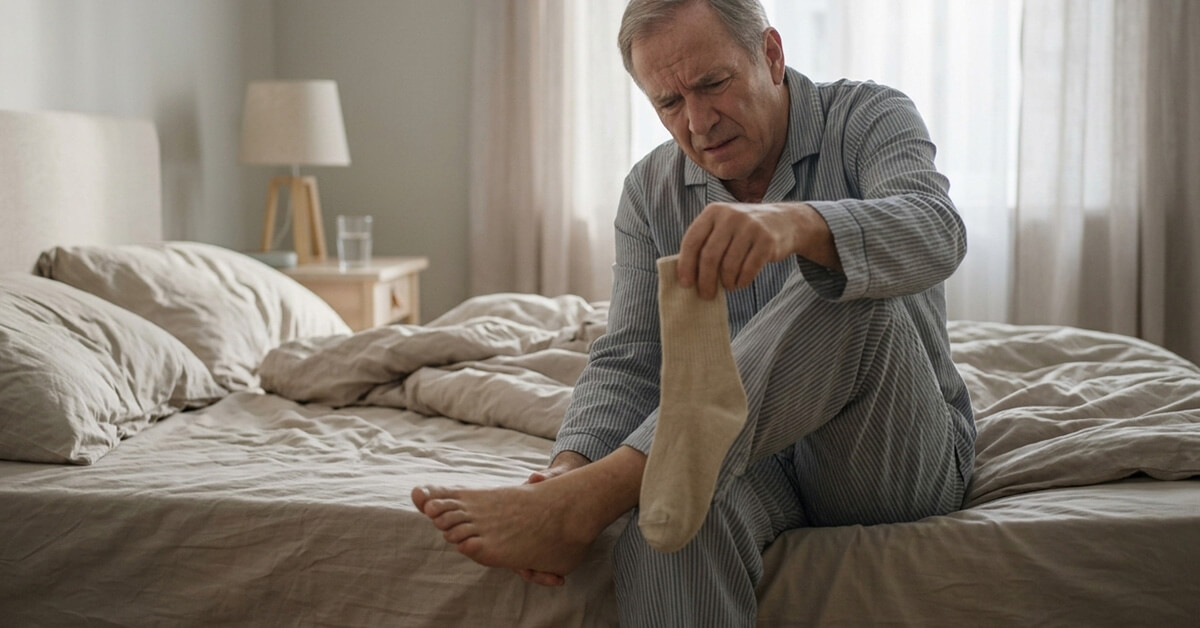
He didn't think about socks until the next morning.
Standing in his bedroom at 6:47am, staring at the dresser drawer, it hit him all at once. Getting dressed had always been automatic — the kind of thing the body just does while the mind is somewhere else. Coffee. The news. What's happening today. Not anymore.
Now there was a calculation involved. How far can I lean? Can I balance on one foot? If I sit on the edge of the bed and try to reach down, am I breaking the rule?
He tried anyway. Made it about halfway before his hip reminded him, firmly, that the surgeon had been serious.
The sock won that round.
The Rule Exists for a Reason. That Doesn't Make It Less Maddening.
Hip and knee replacement surgeries come with strict movement restrictions for good reason. The joint is healing. Certain angles can dislocate or damage the repair before it's had time to stabilize. Surgeons aren't being overcautious — bending past that threshold in early recovery can undo weeks of work in a single unguarded moment.
But the restrictions don't pause daily life. Mornings still happen. Socks are still required. And for anyone who lives alone, or doesn't want to call a family member in to help with something as basic as getting dressed, the gap between medical instruction and practical reality can feel enormous.
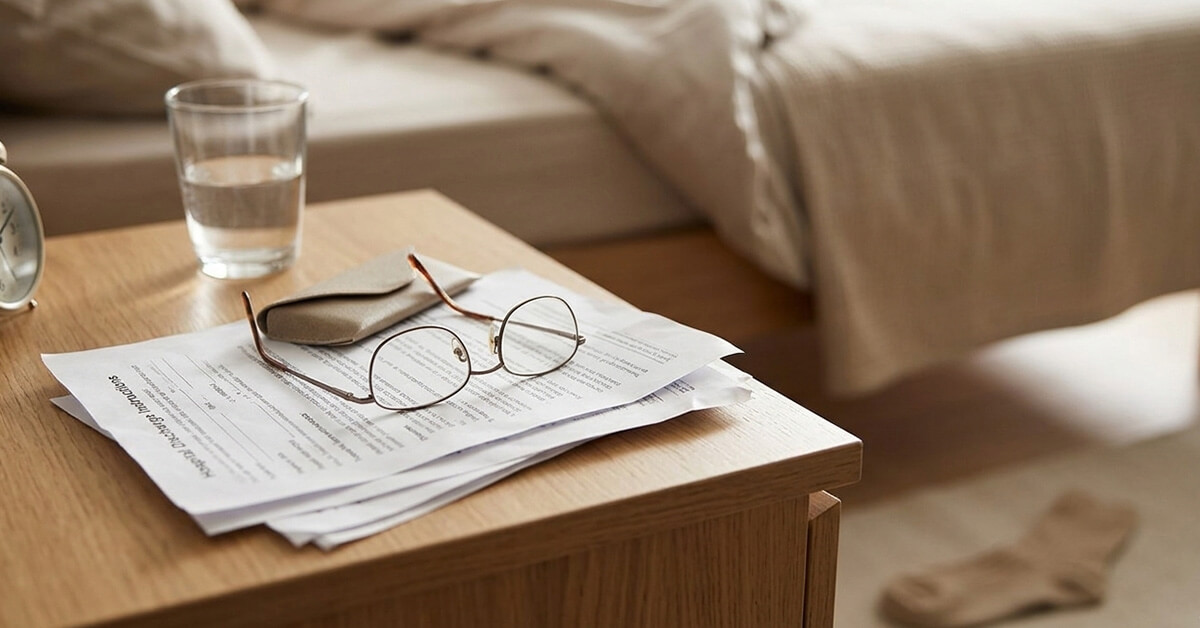
What most discharge paperwork doesn't include is a clear answer to the question: so how exactly do I put on my socks?
Occupational therapists know the answer. Rehab centers teach it. But for patients who go straight home and figure it out on their own, it often takes a frustrating few days — or longer — before they find a real solution.
A Tool That Understands the Problem From the Inside
The device is called a sock aid, and the concept has existed in occupational therapy for decades. But most people outside of formal rehab settings have never encountered one — and the older designs ranged from awkward to nearly impossible for anyone with limited grip strength or hand tremors.
The version Richard eventually found — GlideOn — was different in a few ways that mattered immediately.
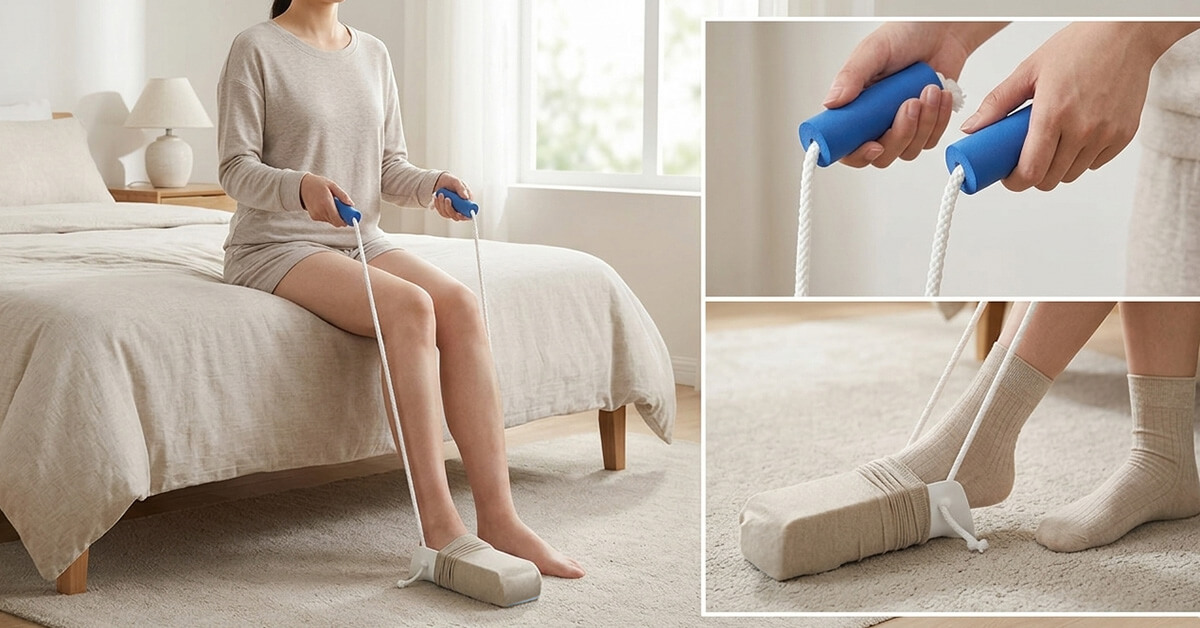
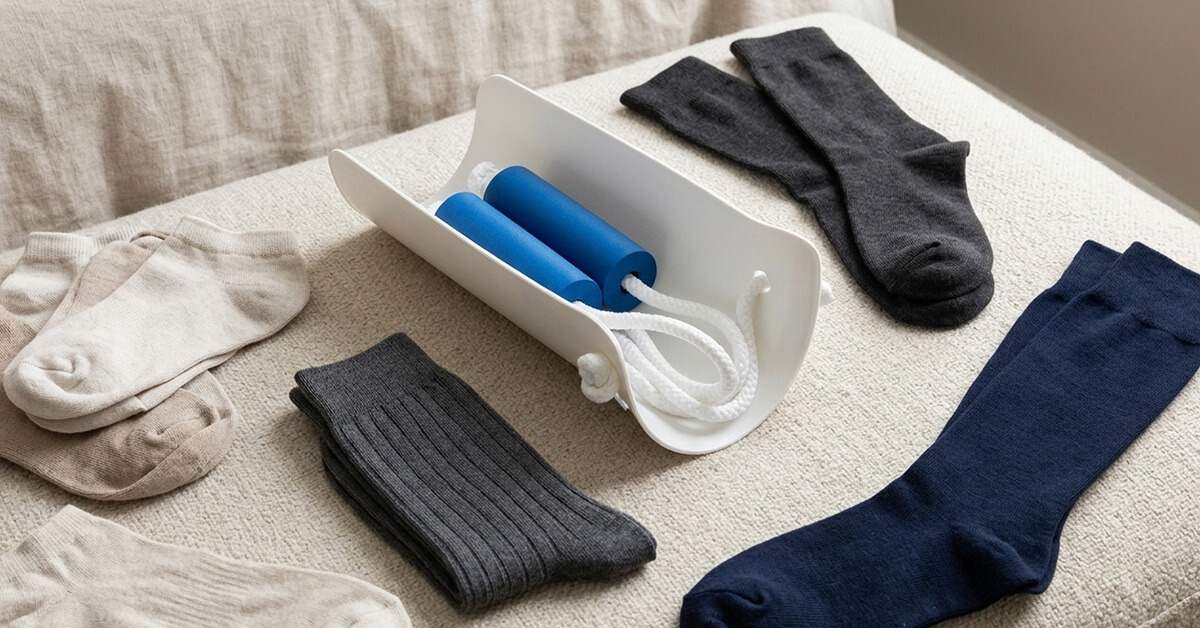
The U-shaped shell holds the sock open on its own. No struggling to stretch fabric with one hand while trying to guide a foot with the other. Load the sock onto the shell, set it on the floor, and slide your foot in. The sock wraps itself around the foot automatically.
The rope extends 38 inches. That's the critical measurement — far enough that the foot is always within reach from a seated or standing position, without requiring any forward bend at all. The hip stays exactly where the surgeon told it to stay.
The foam handles were the detail that convinced him. They're soft and slightly compressible — built for hands that aren't gripping at full strength in the morning, or that shake a little, or that just don't want to work hard before coffee. They don't require force. They just require holding.
First attempt: sock on in under thirty seconds. No bending. No pain. No phone call to his daughter.
The Part That Surprised Him Most
Richard expected the practical benefit. He got it immediately — the sock went on, the hip stayed safe, the morning moved forward.
What he didn't expect was how much it mattered emotionally.
There's a specific kind of weight that comes with needing help for something you've done automatically for sixty-plus years. It's not dramatic. Nobody makes a big deal of it. But it accumulates quietly in the background of every morning — the small reminder that something has changed, that the body is no longer fully cooperating, that independence has an asterisk on it now.
Getting that one task back — just that one — changed the texture of his mornings entirely. Not because putting on socks is significant. Because doing it himself was.
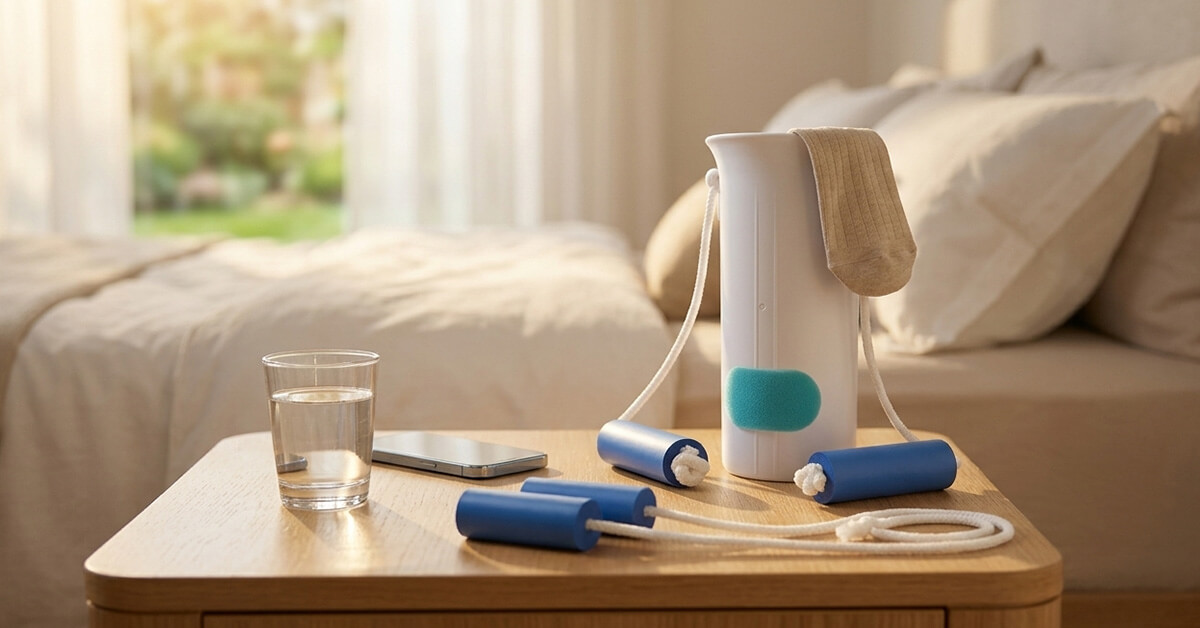
He kept the device on the nightstand after that. Not hidden in a drawer. Not tucked away like something to be embarrassed about. On the nightstand, next to the phone and the water glass, where it belongs.
It Works Beyond Recovery, Too
The twelve weeks ended. The restrictions lifted. Richard kept using it anyway.
That's the detail that shows up consistently among people who find this device during recovery — they don't retire it once they're cleared to move normally again. Because even without surgical restrictions, bending down to the floor first thing in the morning is uncomfortable when you're 68. Stiff joints, a bad back, creaky hips that haven't loosened up yet for the day — none of that disappears when the surgeon signs off.
The device works for ankle socks, dress socks, calf-length, knee-highs. The flexible ABS shell and foam grip are gentle enough on fabric that it doesn't pull or stretch the sock out of shape. For anyone with circulation issues or a doctor-recommended routine of daily socks, it handles repetitive daily use without wearing down.
Light enough to sit on a nightstand. Simple enough to use half-asleep. That combination turns out to have a long shelf life.
What Rehab Patients Wish Someone Had Told Them Earlier
The most common thing said by people who find GlideOn after struggling through the early weeks of recovery isn't "this is amazing." It's quieter than that.
It's: why didn't anyone tell me about this sooner?
The answer is usually that it falls through the cracks. Surgeons focus on the joint. Discharge nurses cover medications and warning signs. The practical questions — how do I shower, how do I dress, how do I get through a morning — get answered in fragments, if at all, unless a patient is routed through formal occupational therapy.
For the people who figure it out on their own, the sock problem gets solved eventually. Sometimes with a family member's help. Sometimes with a lot of frustrated mornings. Sometimes, finally, with a device that was designed for exactly this situation and works the first time you try it.
The difference between week two of recovery and week two with GlideOn isn't just convenience. It's the difference between starting every day with a reminder of limitation and starting every day with a small, quiet proof that you've still got this.
Get GlideOn At 50% Off — For First-Time Buyers Only
This offer is available to first-time buyers and may be removed at any time based on inventory. No code required — the discount applies automatically at checkout.
Stock at this price is limited. Once it's gone, the offer closes.
Click the link above to see if GlideOn is still offering a 50% off discount.