Why Morning Foot Pain Gets Worse After 60 — And What's Finally Helping Thousands of Seniors Walk Without Wincing

The First Step Out of Bed Shouldn't Feel Like Punishment
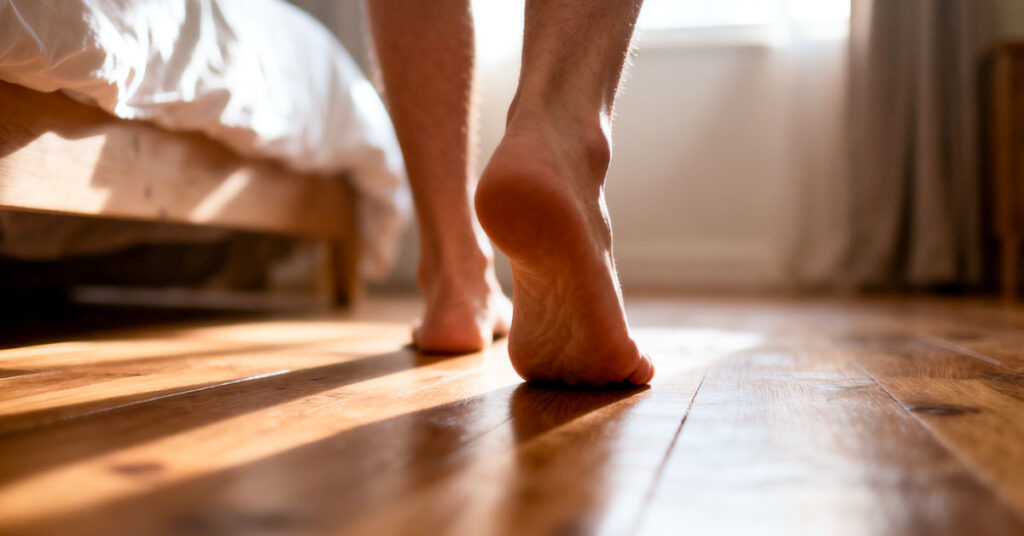
There’s a moment millions of people over 60 know all too well. The alarm goes off. You sit up, swing your legs over the side of the bed, and place your feet on the floor — and that’s when it hits. A sharp, stabbing sensation in the heel. Sometimes it radiates up through the arch. Sometimes it’s a deep ache that makes you grab the nightstand just to steady yourself.
Most people assume this is just aging. That the body is wearing out. That this is simply what mornings feel like now.
But that assumption is wrong — and it’s costing people years of comfortable, active living.
There's a Biological Reason It Hurts Most in the Morning — And It Has Nothing to Do With Weakness
The condition behind that stabbing first-step pain is called plantar fasciitis, and it affects an estimated one in ten people at some point in their lives — with the highest rates among adults over 60.
Here’s what’s actually happening inside the foot.
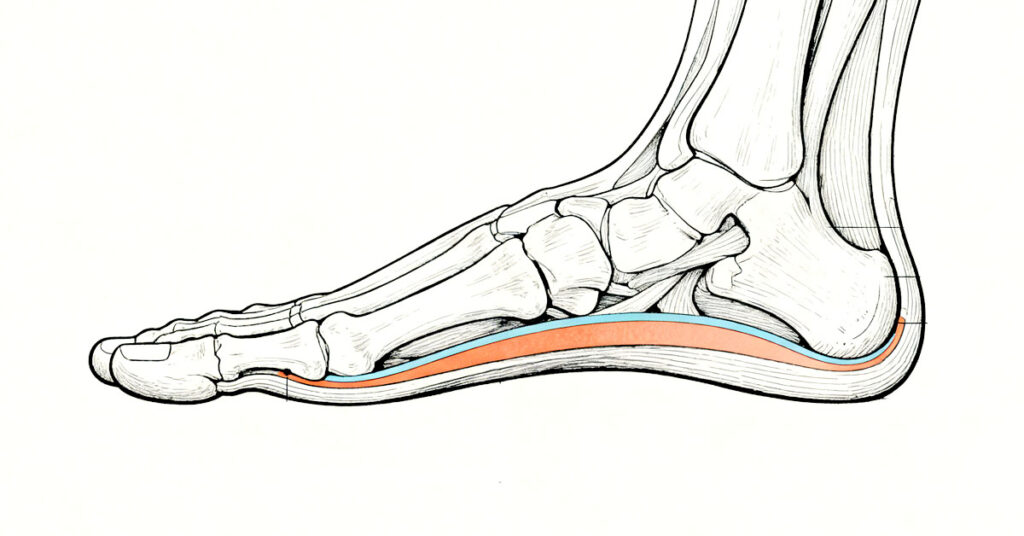
Running along the bottom of the foot is a thick band of tissue called the plantar fascia. Its job is to act as a shock absorber, supporting the arch every time weight is placed on the foot. During sleep, when the foot is relaxed and pointed slightly downward, this band tightens and contracts. The moment weight hits it in the morning, the tissue is yanked suddenly taut — which is exactly where that stabbing pain comes from.
After 60, this problem compounds. The natural fat padding on the heel — which cushions every step like a built-in shock absorber — begins to thin with age. Tissue loses elasticity. Decades of accumulated stress on the foot’s ligaments start to show up as chronic inflammation. The foot that handled everything at 40 is working with significantly fewer resources at 65.
It’s not weakness. It’s physics and biology — and understanding that distinction changes everything about how to address it.
Why Most Solutions Make Things Worse Before They Ever Make Them Better
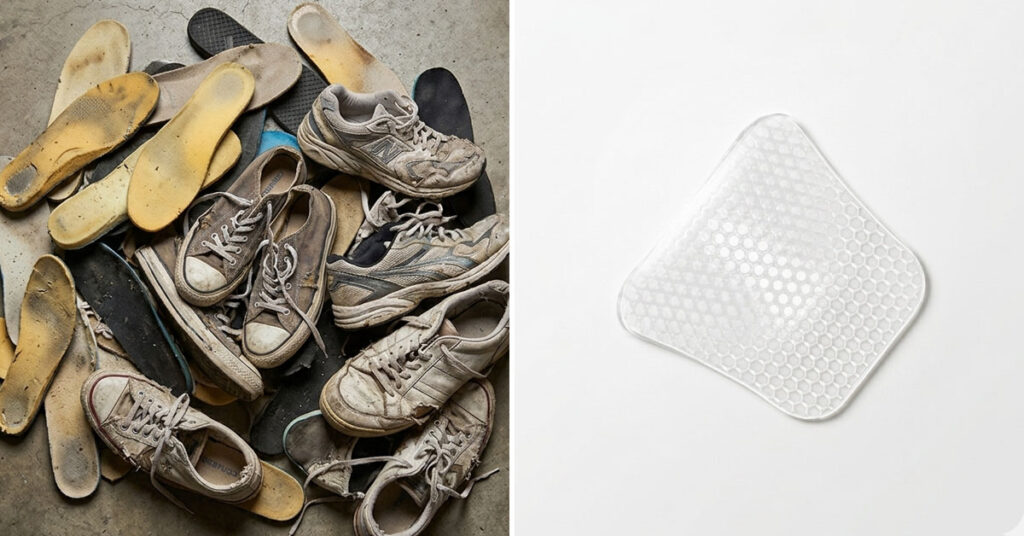
Once the pain becomes undeniable, most people follow the same path. They buy a new pair of “supportive” sneakers. They try gel heel cups from the pharmacy. Some invest in expensive custom orthotics from a podiatrist. A few try stretching routines they found online.
Some of these help. Many don’t. And a surprising number actually make the pain worse in the first few weeks — which leads people to give up entirely, assuming nothing will work.
The reason is almost always the same: too much support, too fast.
When a foot has been without proper arch support for years — or decades — the muscles, tendons, and fascia have all adapted to that flattened, unsupported position. Introducing aggressive arch support overnight is like someone who hasn’t exercised in years suddenly running five miles. The tissue isn’t ready. It rebels.
What the foot actually needs is a gradual introduction. A chance to adapt. A stepping stone between “no support” and “full support” — not a cold plunge into the deep end.
The Simple Principle That Changes Everything: Start Low, Build High
This is the core insight behind a new category of arch support that’s been quietly gaining attention among seniors dealing with chronic foot pain.
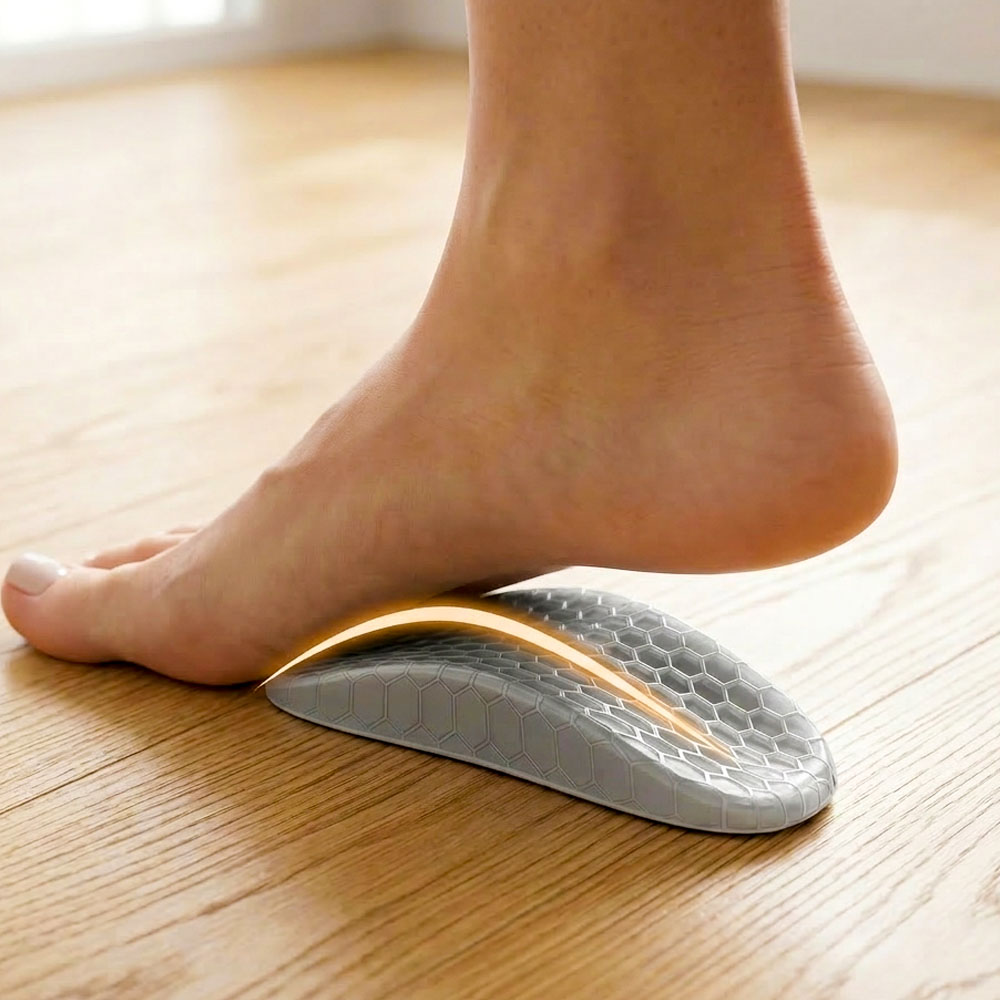
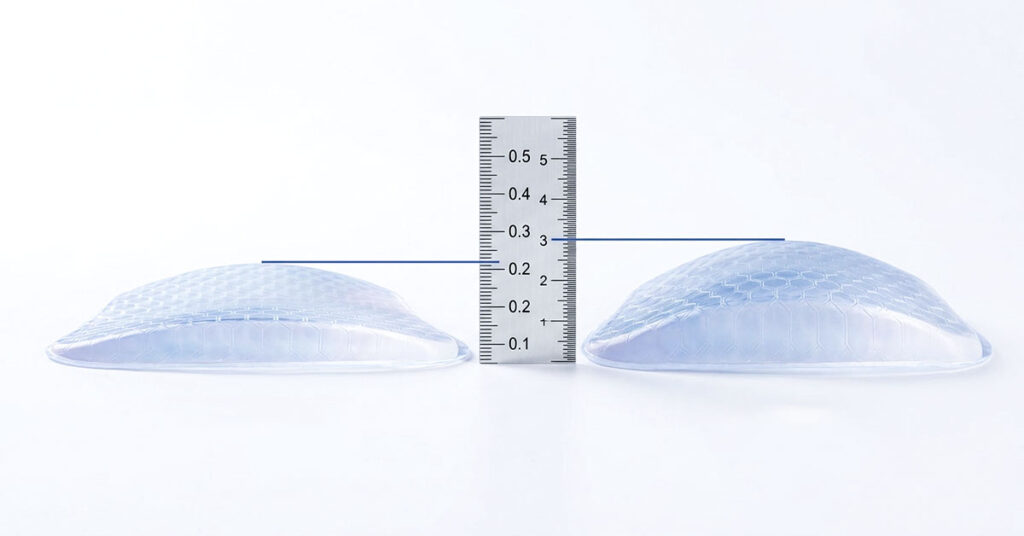
Rather than offering one fixed height of arch support, a small gel insert called FlexArch comes in two heights — 9mm and 14mm — specifically designed to let the foot adapt gradually. Start with the lower profile. Wear it for a week or two. Let the arch begin to wake up, strengthen, and adjust. Then, when that lower height feels natural and comfortable, transition to the higher option for more substantial relief.
It sounds almost too simple. But this progressive approach mirrors what podiatrists and physical therapists have recommended for decades — the problem has always been that most products don’t offer it.
The inserts themselves are made from a clear, flexible gel that conforms to the natural shape of the foot. The underside features a honeycomb-textured surface that grips the inside of a shoe without adhesive tape or fuss — meaning they stay exactly where they’re placed through long days of standing or walking. They fit inside almost any closed-toe shoe without adding noticeable bulk.
"By Day Three, I Wasn't Grabbing the Nightstand Anymore"
Margaret, 68, had been dealing with heel pain for four years before she tried FlexArch. She’d already cycled through two pairs of specialty shoes, a set of custom orthotics her insurance didn’t cover, and more drugstore insoles than she could count.
She started with the 9mm version on a Monday. The first morning, she noticed the inserts but didn’t notice a dramatic difference. By Wednesday, that white-knuckle moment stepping out of bed had softened. By the following week, she was taking her morning walk again — something she’d quietly given up eight months earlier.
“I kept waiting for it to stop working,” she said. “That’s how used to disappointment I was.”
She’s now on the 14mm version. She walks 40 minutes every morning.
Her story isn’t unusual. The washable design means the inserts maintain their grip over months of daily wear — a rinse under water and an overnight air-dry restores the adhesive surface completely, making them a practical long-term solution rather than a one-month fix.

The People Who Benefit Most — And How to Know If That's You
FlexArch tends to work best for people who fit a specific profile. If several of these sound familiar, the progressive support approach is likely worth trying.
The morning pain is worst within the first few steps, then eases somewhat as the foot warms up. There’s a deep ache in the arch or heel after long periods of standing — at a family gathering, a grocery run, a long church service. Previous insoles or supports were abandoned because they felt too aggressive or created new discomfort in the knee or hip. Flat feet or a noticeably low arch have been a lifelong feature, now worsening with age.
None of these are permanent sentences. They’re signals that the foot is asking for something specific — and that something is graduated, consistent support that works with the body’s pace rather than against it.
One Small Insert. One Different Kind of Morning.
The cruelest part of chronic foot pain isn’t the pain itself. It’s what it takes away. The morning walks that get shorter. The trips that get skipped. The grandchildren who run ahead while you hang back. The slow, almost invisible shrinking of a life built around movement.
None of that is inevitable.
The foot is remarkably responsive to the right kind of support — even at 70, even after years of pain, even after a long string of failed attempts. The key is simply approaching it the right way: gradually, consistently, and with a product designed to meet the foot where it actually is, not where it was thirty years ago.
Try FlexArch at 50% Off — First-Time Buyers Only
For a limited time, first-time buyers can get FlexArch Progressive Support Inserts at 50% off the regular price. This offer is only available while current stock lasts — once it’s gone, the discount comes down.
If mornings have become something to dread rather than something to look forward to, this is the moment to change that.
→ Claim Your 50% Discount Here (Limited stock at this price)
Customer reviews
| 5 Stars |  |
91% |
| 4 Stars |  |
9% |
| 3 Stars |  |
0% |
| 2 Stars | |
0% |
| 1 Star | |
0% |