Estheticians have used the same method for forty years. It only recently got small enough to sit in a bathroom drawer.
There is a particular moment most women over fifty will recognise.
You are standing on the edge of the bath, twisting round, trying to see the backs of your own thighs in a mirror that was never positioned for this. The overhead light is doing you no favours. And the thing you are looking at is not quite what you remember.
Not heavier, necessarily. Just — softer. Looser. The skin has gone slightly crepey and the dimpling that used to only show when you pressed on it now shows when you don't.
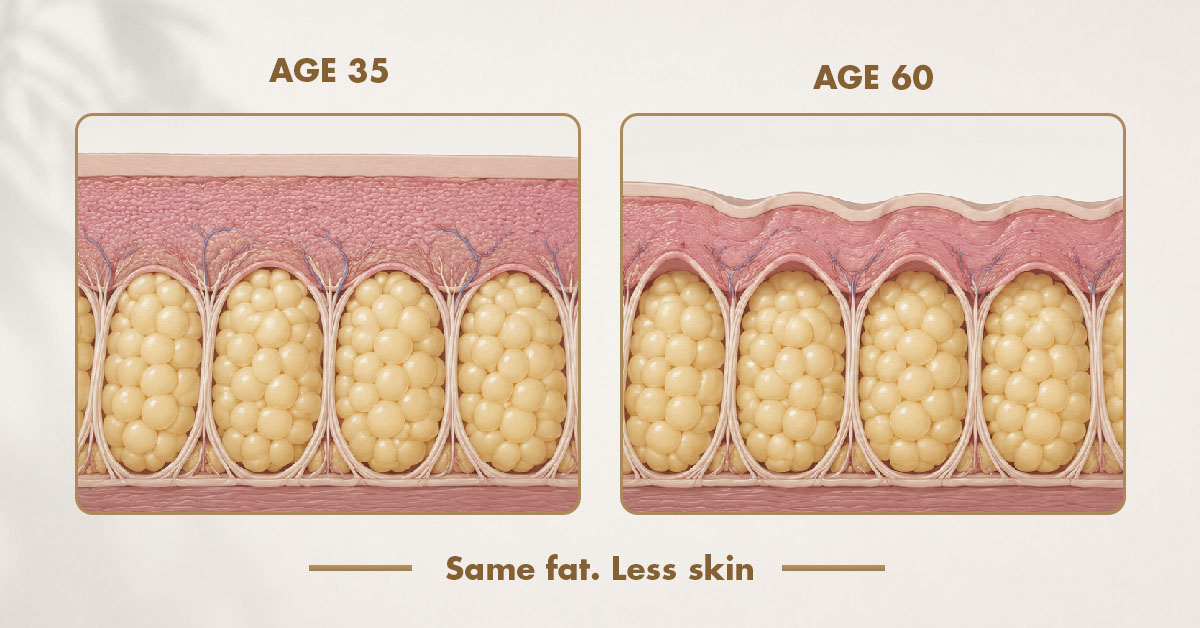
Here is what almost nobody tells you about that moment: the thing that changed is probably not the fat underneath. It is the skin on top.
What actually changed
From roughly the mid-forties onward, collagen production falls away. The skin gets measurably thinner and less elastic. Circulation in the thighs and hips slows. Fluid lingers where it used to move on.
The fat that causes dimpling has, in most cases, been sitting exactly where it is for twenty or thirty years. What used to hold it smooth was a firm, thick, well-supplied layer of skin over the top. As that layer thins, the same fat starts to show through — and the fibrous cords tethering the skin down start to pull more visibly.
Which explains the thing that has quietly infuriated a great many women: losing weight didn't fix it. It was never going to. You were treating the wrong layer.
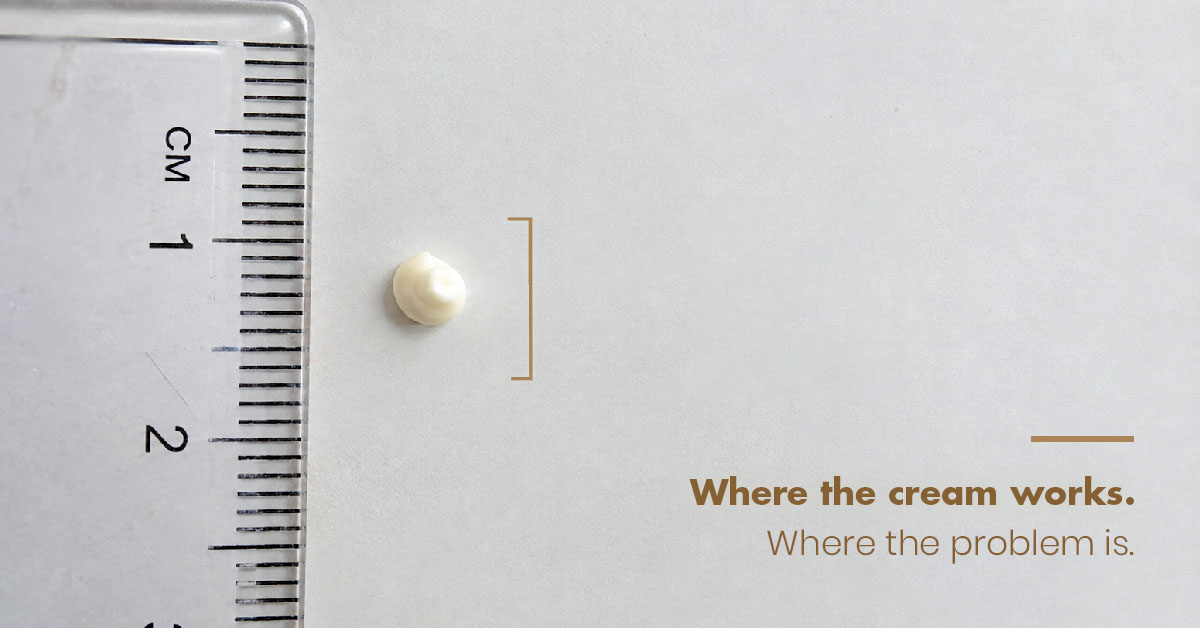
It also explains why creams don't touch it. A cream is working on the outermost fraction of a millimetre. The problem is several millimetres down.
So what do the clinics actually do?
This is the part worth knowing, because it is far less exotic than the pricing suggests.
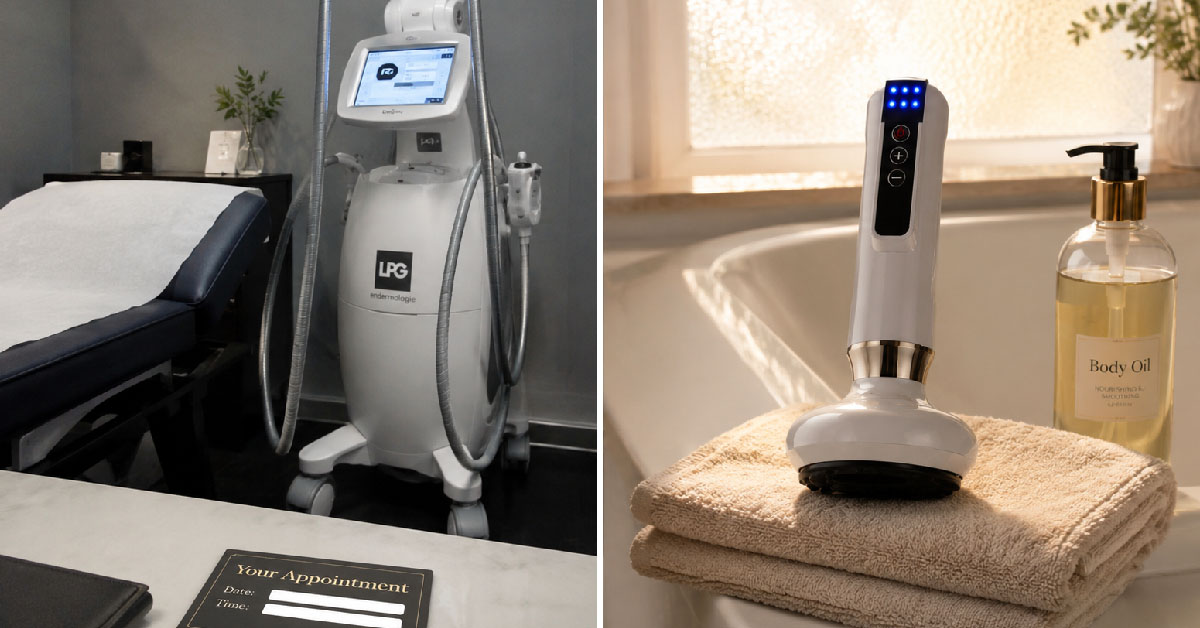
The most established professional treatment for the appearance of cellulite is called endermologie. It has been used in European clinics since the 1980s. Sessions typically run $75 to $150, and a standard course is ten or more.
The machine does two things.
It applies suction, which lifts a fold of skin away from the tissue beneath it. And it applies mechanical rolling or massage to that lifted fold.
That is it. That is the whole apparatus.
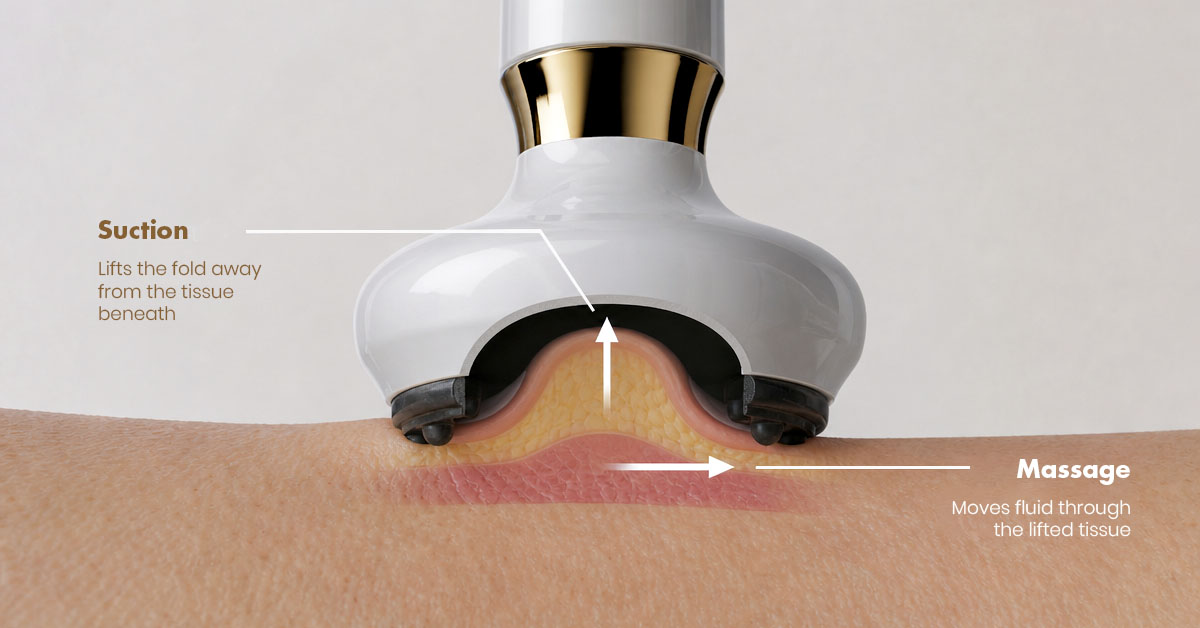
The lifting matters because it puts the connective tissue under a kind of tension it never otherwise experiences — everything else in life presses skin down, not up. The rolling matters because it moves fluid out of an area where circulation has slowed and drainage has gone sluggish.
A review of the published research in 2016 found that vacuum massage improved tissue hardness and skin elasticity, and increased fibroblasts and collagen fibres. Fibroblasts are the cells that manufacture collagen. In plain terms: lifting and working the tissue appears to prompt the skin to rebuild some of the structure it has been steadily losing.
None of this is a secret. It is simply that for four decades, the machine that does it was a large piece of clinic equipment, and access to it was rented out by the half hour.
The part that has changed
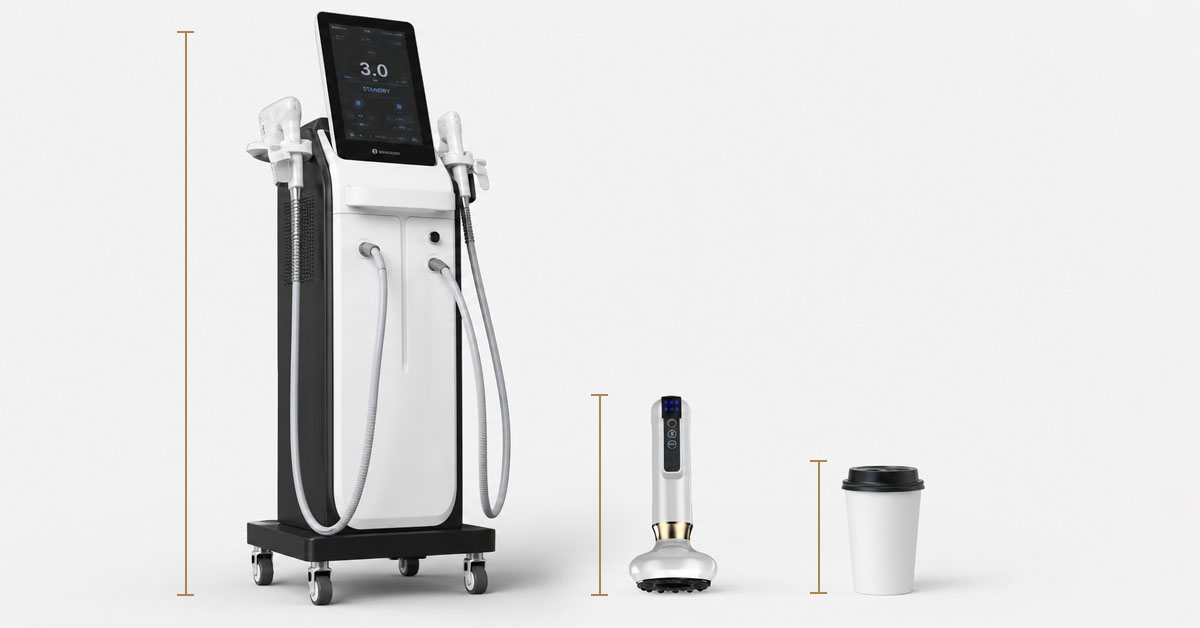
Suction pumps got small. Motors got small. Batteries got good.
DermaFit is, in mechanical terms, a home version of that same two-part approach — adjustable vacuum suction combined with massage — in a cordless handset you hold yourself.
It adds two things the clinic machines of the 1980s did not have. Red light at 660nm, which is the same wavelength range used in dermatology for collagen stimulation. And gentle infrared warming, which raises local blood flow and makes the tissue more pliable before the suction does its work.
The suction is adjustable across 12 levels, from level 1 upward, because skin at 60 tolerates considerably less than skin at thirty and the cheap fixed-strength cups sold online are the reason a lot of women gave up on this method entirely.
What we will not tell you
We are not going to tell you your cellulite will disappear in twenty days. It won't, and anyone selling you that number is counting on you not returning the product before their guarantee window closes.
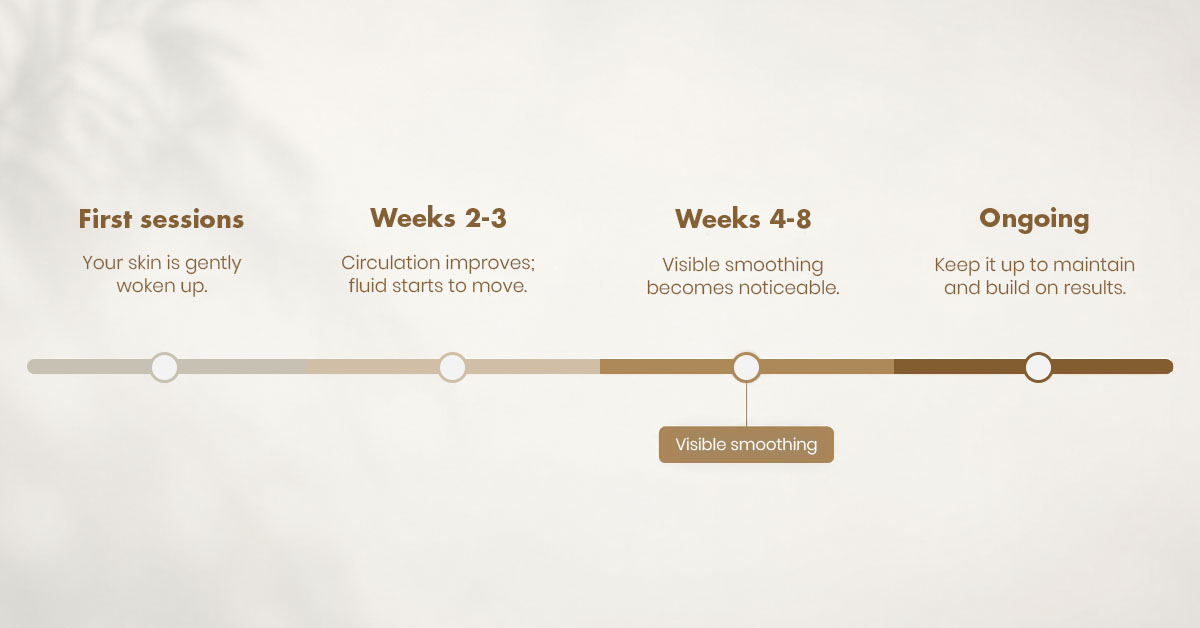
Here is the honest timeline, drawn from the clinical literature on vacuum massage and from the way endermologie courses are actually structured:
- First few sessions: your legs feel lighter, particularly in the evening. This is fluid movement, and it is real, but it is not yet a change in your skin.
- Weeks 2 to 3: skin feels softer and more supple to the touch. Some mild redness after a session is normal and fades within an hour or two.
- Weeks 4 to 8: this is where visible smoothing typically begins to show, with consistent use of around ten minutes per area, three to five times a week.
- Beyond: it is maintenance, the same way it is with clinic courses. Stop entirely and the appearance gradually returns.
That is a slower promise than most of this category makes. It is the one the evidence actually supports.
The problem nobody designs for
Ask a woman why her last anti-cellulite tool ended up in a drawer and she will rarely say it didn't work. She will say she couldn't reach.
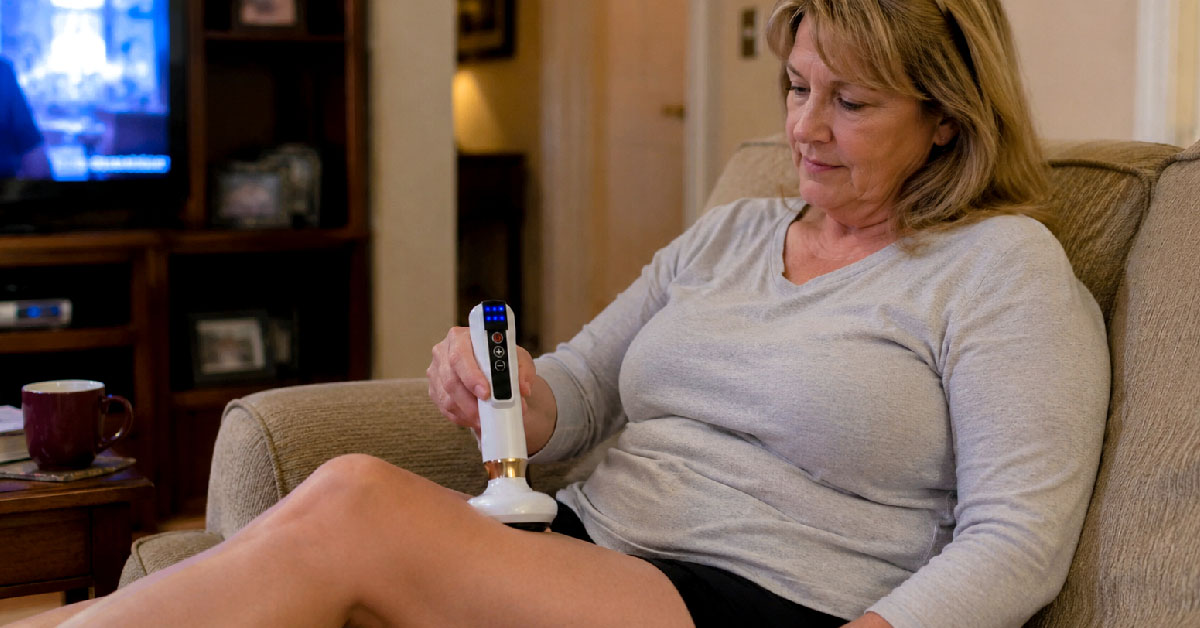
The area that bothers most women most is the back of the upper thigh — the one place you can neither see properly nor comfortably reach with a two-handed manual tool. Rollers require pressure you cannot generate at that angle. Manual cups require a seal you cannot maintain one-handed.
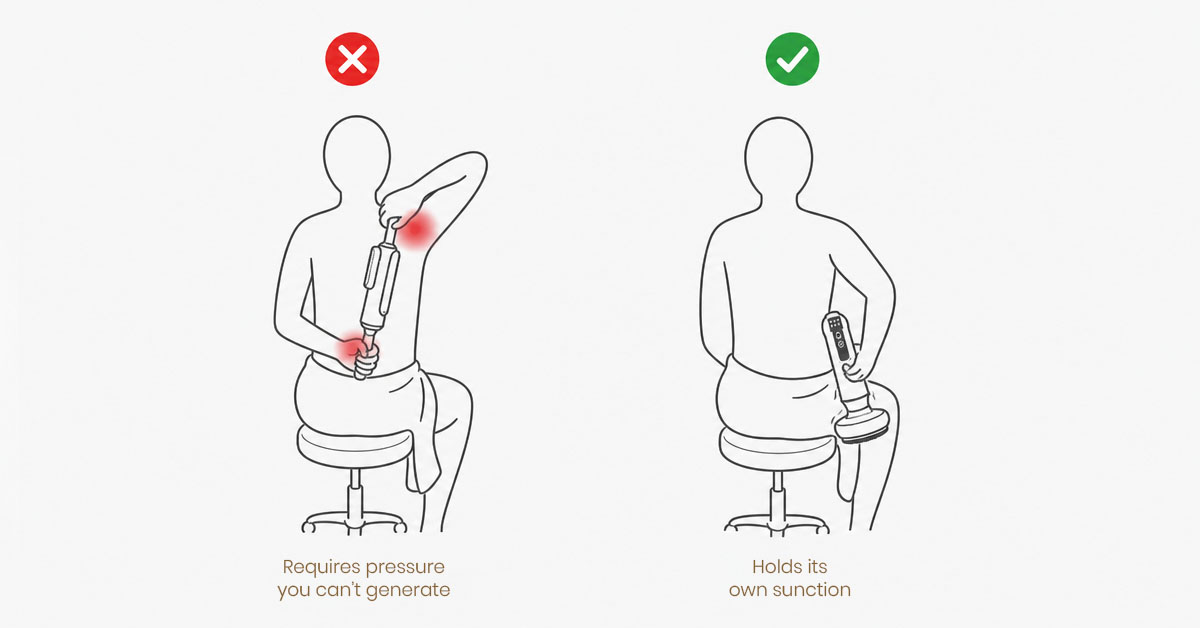
A powered handset holds its own suction. You do not have to grip, press, or generate force. You can do it sitting on the edge of the sofa with the television on, which is the only version of this that anyone actually keeps up for eight weeks.
Before you buy one
A few honest notes.
It should not hurt. A drawing sensation and warmth, yes. Pain, no. If it hurts, the suction is too high — turn it down. Aggressive suction does not produce faster results, it produces bruising.
Use oil. The device needs to glide. Any body oil will do. Dragging on dry skin is what causes marks.
If you take blood thinners, or have varicose veins, a clotting disorder, lymphoedema, or are being treated for any circulatory condition, speak to your doctor before using suction on your legs. This is not boilerplate. Vacuum devices raise bruising risk meaningfully for anyone on anticoagulants, and it is a conversation worth having first.
Not for the face, neck, or over broken skin.
Where it stands
A ten-session endermologie course at $75 to $150 a session comes to somewhere between $750 and $1,500, plus the appointments. At the surgical end, procedures like Cellfina — which physically cuts the tethering bands and holds up well over two years in its pivotal study — run $3,000 and upward.
DermaFit is a fraction of that — paid once, not per session, and it lives in your bathroom rather than in someone's appointment book.
It is not equivalent to a surgical procedure and we would not claim otherwise. What it is, fairly, is the same mechanical principle the clinics have used for forty years, available to use as often as you like, for a fraction of what a single session costs.
If you want to try it
DermaFit is currently running a one-time 50% discount for first-time buyers — one per customer, on your first order only.
It is worth being plain about why an offer like this exists. Most women reading this have bought something for their cellulite before and been disappointed, and the honest obstacle is not price, it is the reasonable suspicion that this is another one. The discount exists to lower the cost of finding out. Combined with the 30 days return window, the practical risk of trying it is close to nothing — which is roughly the position we think a reader in your situation should be in before spending anything at all.
Click the link above to see if DermaFit is still offering a 50% off discount.