There's a specific memory that won't leave me alone.
It's a Tuesday evening, maybe 2009. I'm running a trail I used to hit 3 or 4 times a week — nothing dramatic, about 4 miles through a park near my old apartment. My breathing is locked in. Not labored, not forced. Just... automatic. Inhale matches stride, exhale matches stride. My lungs feel bottomless. I finish, walk to my car, barely winded, already thinking about dinner.
I didn't know that was a luxury. You never do.
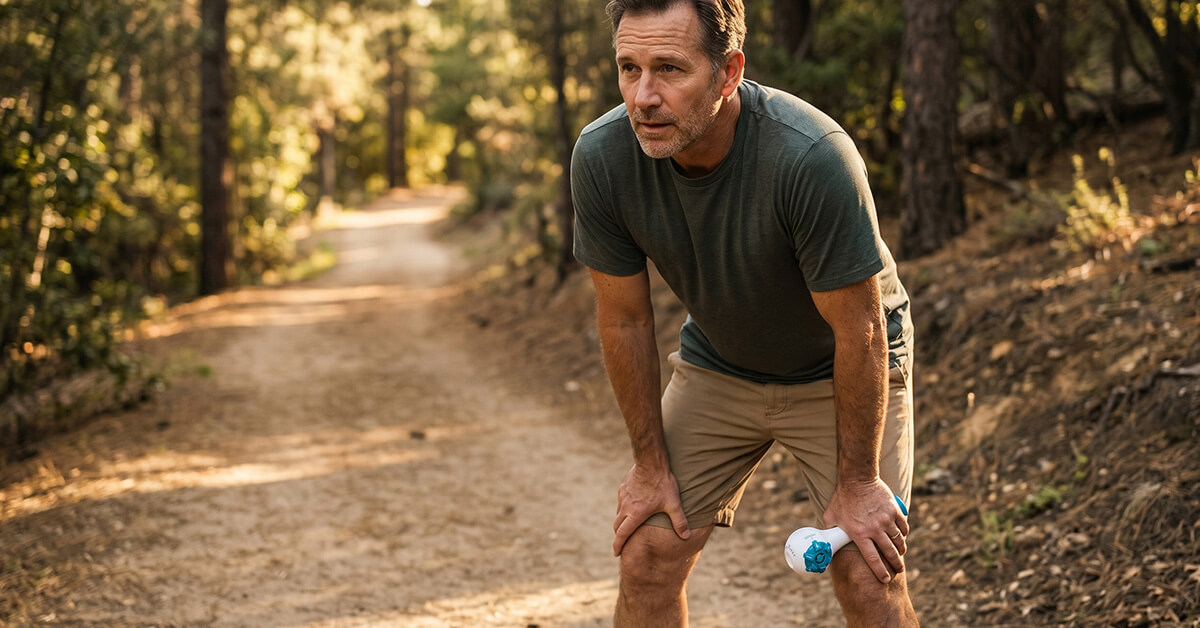
Fast forward to last year. I'm walking up a moderate hill with my dog — a hill I wouldn't have even registered a decade ago — and I have to stop. Not because my legs gave out. Because I couldn't get enough air. I stood there with my hands on my knees, breathing like I'd just sprinted a quarter mile, and something broke inside me that had nothing to do with fitness.
It was the realization that I didn't recognize my own body anymore.
If you've ever been someone who moved well and breathed easily — and then slowly, invisibly became someone who didn't — you already know this feeling. It's not dramatic. It's not a medical emergency. It's just a quiet, persistent grief for the version of yourself that used to show up without thinking.
This is about what happened when I stopped trying to get that person back and started doing something much simpler instead.
The Problem Isn't Motivation. It's That Nobody Tells You What Actually Weakened.
Here's what I got wrong for years: I thought my problem was cardiovascular. I assumed I needed to "get back in shape" — run more, push harder, find some program that would reverse the clock. So I'd try. I'd go out for a jog, gas out in 8 minutes, feel terrible about it, and quit for 3 months. Repeat.
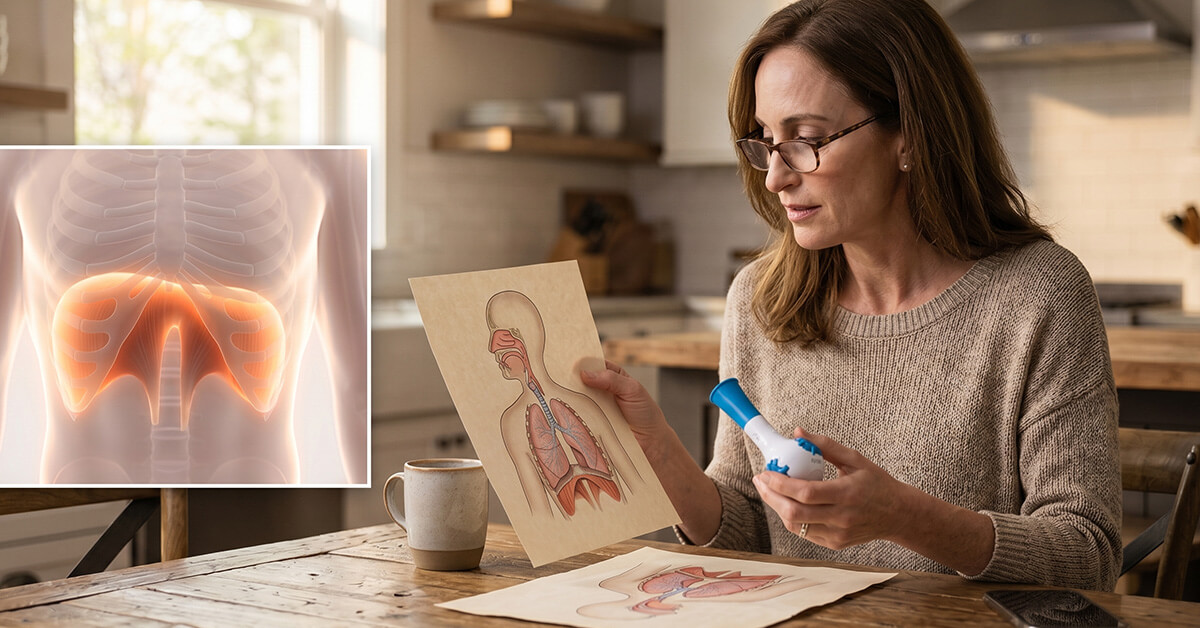
What nobody told me — and what I eventually stumbled onto through a rabbit hole of respiratory therapy research — is that the muscles responsible for breathing can weaken independently of everything else. Your diaphragm. Your intercostals. The muscles that control how deeply you inhale and how efficiently you exhale. They atrophy just like a bicep you stop using. Quietly. Gradually. Without any warning label.
And when those muscles weaken, it doesn't matter how strong your legs are or how willing your mind is. Your breathing becomes the ceiling. Everything else hits it.
This reframed the entire problem for me. I wasn't broken. I wasn't old. I had a specific set of muscles that had gone untrained for over a decade, and they were dragging every other system down with them.
The question became: can you actually train them back?
I Found a Device That Trains the One System Nobody Thinks to Train
The device is called DeepAir. I want to be honest about how I found it — I wasn't looking for a product. I was looking for respiratory muscle training exercises after reading a paper about how resistance breathing is used in pulmonary rehabilitation. Most of what I found was either clinical equipment that costs thousands or flimsy plastic gadgets that looked like party favors.
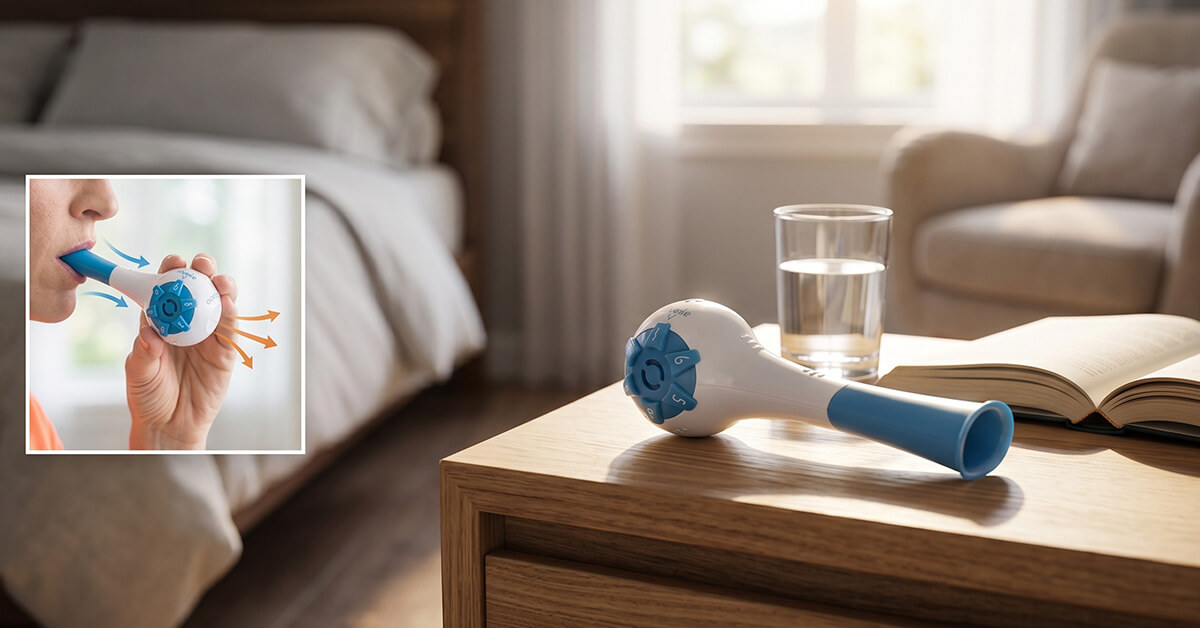
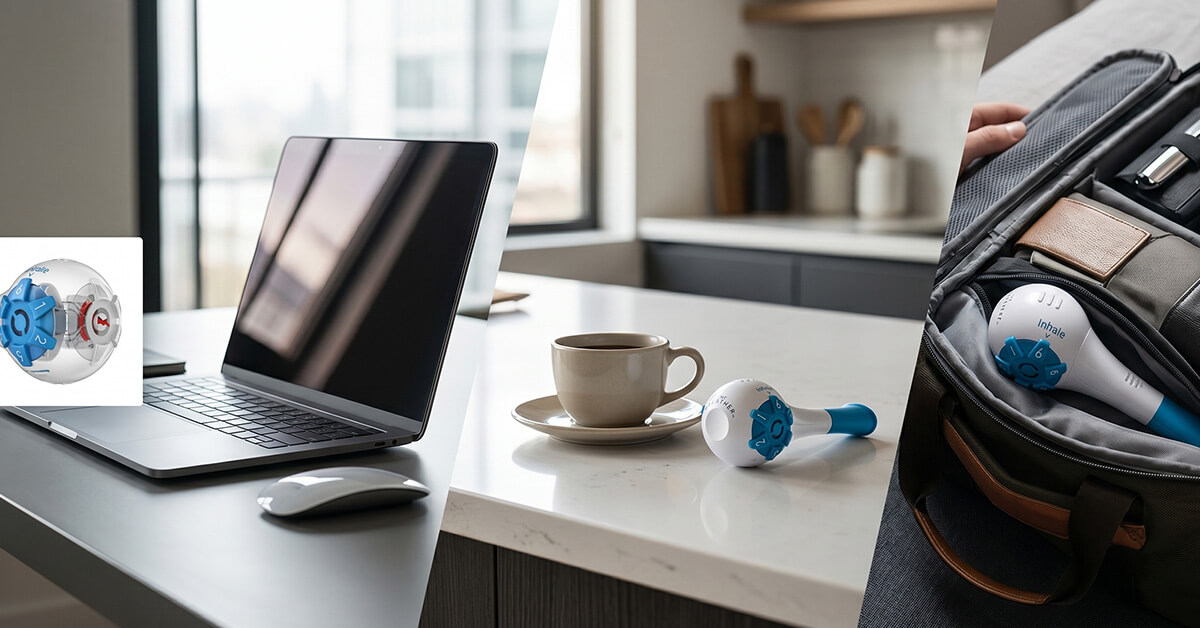
DeepAir sat somewhere different. It's a handheld breathing trainer that provides adjustable resistance on both the inhale and the exhale. That "both directions" part matters more than it sounds. Most devices only resist in one direction — usually inhalation. But exhalation strength is half the equation. It's what clears stale air from your lungs and makes room for the next full breath. Training only one side is like doing bicep curls but never extending your arm.
The mechanism is mechanical. No batteries, no app, no Bluetooth nonsense. You breathe in against resistance. You breathe out against resistance. Your diaphragm and respiratory muscles get loaded, the same way a dumbbell loads your arm. Over time, they adapt. They get stronger.
It also encourages diaphragmatic breathing — the deep belly breathing pattern that most of us abandon somewhere around middle age in favor of shallow chest breathing we don't even notice we're doing. That shift alone changes how much oxygen actually reaches your organs.
I ordered one without enormous expectations. Honestly, I half-expected to use it twice and forget about it.
The First Week Was Humbling. The Third Week Was Different.
Day 1, I set the resistance low and did 2 sets of 10 breaths. My diaphragm was sore the next morning. Sore. From breathing. That told me everything I needed to know about how weak those muscles had become.
By the end of week 1, I'd settled into a routine — morning and evening, about 5 minutes each session. Nothing heroic. The kind of commitment that's almost too small to talk about, which is exactly why it's sustainable. Nobody quits a 5-minute habit.
Week 2 felt like nothing was happening. I almost wrote it off.
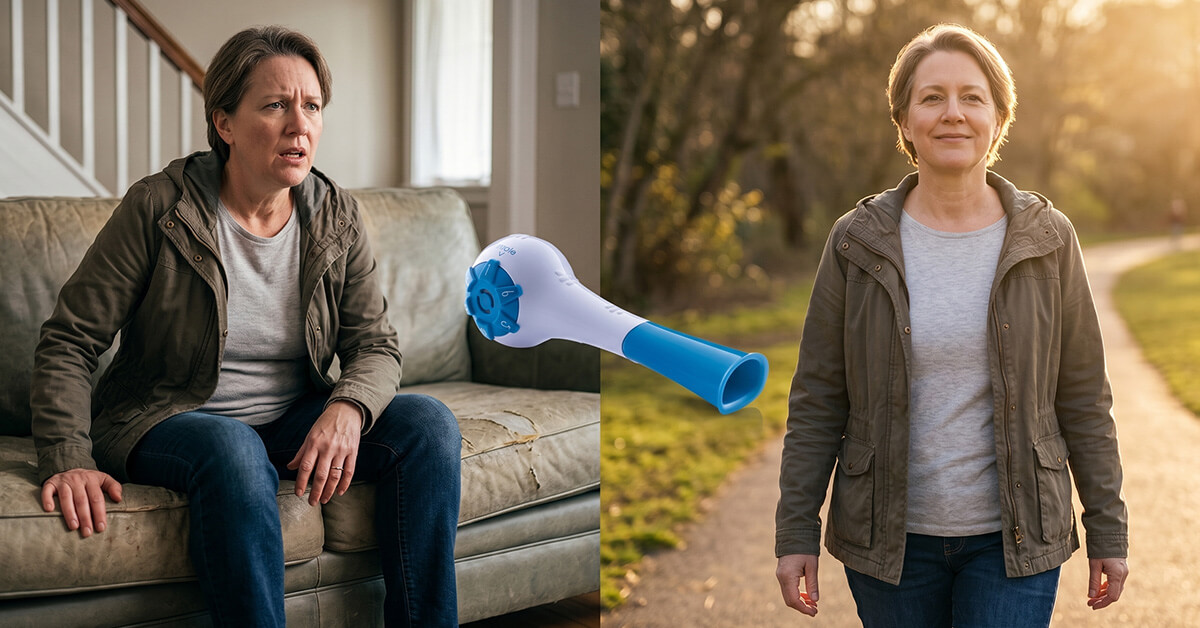
Then week 3 hit, and something shifted. I was walking the same hill — the one that had embarrassed me with my dog — and I got to the top without stopping. I wasn't gasping. I wasn't performing some superhuman feat. I just... walked up a hill and kept breathing. Normally.
It sounds so small written down. But if you've lost that, you know it isn't small at all. It's the difference between avoiding things and not having to think about them.
By week 6, I noticed it during other activities too. Carrying groceries up the stairs. Keeping pace during a conversation while walking. Playing with my nephew without having to sit down every 10 minutes. The ceiling had lifted. Not all the way back to 35-year-old levels — I'm not pretending that — but enough that I felt like I was doing something real for my body again.
And that turned out to be the thing I was actually missing.

It Wasn't About Getting My Old Body Back. It Was About Stopping the Freefall.
I want to be careful here because I think the fitness industry has poisoned this conversation. Everything is framed as transformation — before and after, old you versus new you, radical change in 90 days. That framing makes people who were once fit feel like unless they can get all the way back, there's no point starting.
DeepAir didn't give me my 35-year-old lungs back. What it gave me was something I hadn't felt in years: the sense that I was actively building something in my body instead of watching it decline. That's a completely different emotional experience than any workout program ever gave me, because this one was specific, trackable, and undeniably working.
You breathe against resistance. Your muscles respond. Your lung capacity measurably increases. Your oxygen flow improves. Your endurance follows.
It's not faith-based. It's not motivational. It's mechanical. And for someone who'd lost trust in their own body's ability to improve, that mechanical simplicity was everything.
There's a version of this where I tell you it changed my life. But more accurately, it changed my trajectory. I was on a path where every year, basic physical tasks would get slightly harder, and I'd accept each small loss as inevitable. DeepAir interrupted that pattern. It gave me a floor — a daily habit that takes less time than brushing my teeth and steadily pushes that floor upward.
1,840 verified reviews from other people suggest I'm not the only one who needed exactly this.
What Makes It Work When Other Things Didn't
A few things worth noting for anyone who's been burned by wellness products before:
It trains both directions. Inhale resistance and exhale resistance. Most competitors skip the exhale side, which is like doing half a rep and calling it a workout. DeepAir loads the full breathing cycle. That's why it produces balanced respiratory strength instead of partial improvement.
It's drug-free. No prescriptions, no pharmacy, no side effects to Google at 2 AM. It's a physical training tool. Period. For anyone who's tired of adding another pill to the morning lineup, that matters.
It takes 5 minutes. Twice a day is ideal, but even once makes a difference. The reason most breathing programs fail is because they ask for 20 to 30 minutes of focused practice. Nobody maintains that. DeepAir respects the reality of how habits actually survive.
It goes anywhere. Desk drawer, nightstand, carry-on bag. There's no setup, no charging, no calibration. You pick it up and breathe. That portability eliminates the most common excuse — "I wasn't at home" — before it ever forms.
It's built to last. Premium construction, not disposable plastic. This is something you use daily for months and years, and it's designed to hold up to exactly that.
The simplicity is the feature. Not a limitation.
The Feeling You're Actually Chasing
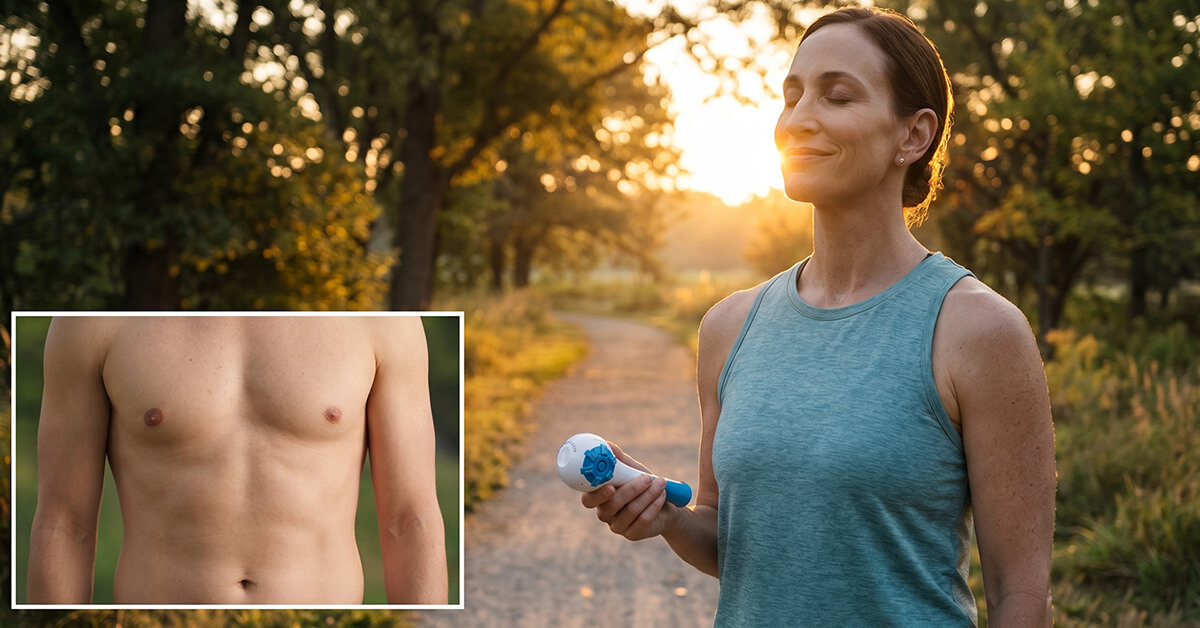
Here's what I've come to believe after 4 months of using this thing daily: most formerly active people don't actually want to be 35 again. They want to stop feeling like a stranger in their own body. They want to climb a flight of stairs without a recovery period. They want to take a deep breath and feel it actually land — all the way down, filling the lungs completely, the way it used to without thinking.
That feeling isn't youth. It's function. And function is trainable at any age.
DeepAir doesn't promise to reverse time. It promises to train a specific, measurable system in your body that directly affects how you breathe, how much oxygen reaches your organs, and how much endurance you carry into every single thing you do during a day.
48,000 people are already using it. The 30-day money-back guarantee means there's no risk in finding out if you're one of the ones it clicks for.
I can tell you this much: I still can't run that trail the way I did in 2009. But last Saturday, I walked it — the whole thing, including the uphill stretch — and I didn't stop once. My breathing held. My body felt like mine again.
That's not everything. But it turns out it's enough.
Try DeepAir Today — At Half the Regular Price
For a limited time, first-time buyers can get DeepAir at 50% off. No promo code needed — the discount applies automatically.
Every order ships within 24 hours and is backed by a 30-day money-back guarantee. If it doesn't change how you breathe, send it back. Full refund, no questions, no hassle.
Available in Green, Blue, and Pink. Stock is limited at this price.
This is the part where you decide whether to keep reading about breathing — or to start training it.
Click the link above to see if DeepAir is still offering a 50% off discount.